Posted By

Recent Posts
-
Speaking of HealthAre stretch marks normal for teens?

Uncomfortable skin conditions in kids: Eczema, psoriasis
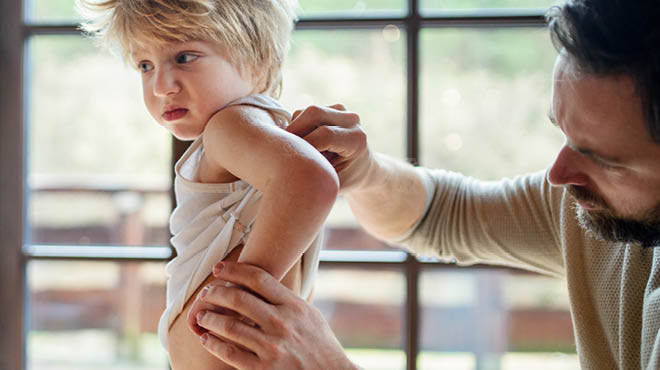
Itchy, uncomfortable skin is bothersome for adults, but it can be especially difficult for children. It can interrupt sleep for the entire family and be a distraction during the day, or cause pain and embarrassment.
Two common causes of itchy skin in children are eczema and psoriasis. These chronic, inflammatory diseases of the skin cause dry, itchy and inflamed skin. These conditions can go through cycles, flaring up and then subsiding. They can cause intermittent flares or be unrelenting. Importantly for family and friends, eczema and psoriasis are not contagious.
If your child has skin issues, here's what you need to know about these common types of skin conditions:
Eczema basics
Eczema, also called atopic dermatitis, is a common, itchy skin condition in childhood. Most cases begin before age 5, but eczema can occur at any age. It is long-lasting and can appear anywhere on the body.
When a child has eczema, the skin becomes dry and cracked. It can be especially itchy and look like small, raised bumps on the skin. Sometimes, the skin can thicken or darken. It can even become painful when the skin gets raw from intense scratching.
At its core, eczema is a barrier problem of the skin. Under normal circumstances, the skin acts as a barrier for things moving in and out of the body. When a person has eczema, the barrier is not working as effectively. This allows environmental contaminants to penetrate the skin and protective moisture to leave.
Many items can trigger eczema. Common culprits are fragrances and dyes in products, like laundry detergents, soaps and lotions. Keeping a journal of potential triggers and the child's skin reaction can be helpful. This doesn't need to be elaborate but having a way of documenting symptoms helps to identify eczema triggers for your child.
People with eczema may have other conditions in the atopic triad, namely asthma and allergic rhinitis also called seasonal allergies. Some children have one or two of these conditions, while their siblings have other ones. Researchers are still trying to understand the link between these conditions, but there is clearly a genetic component.
Treating eczema
The best way to treat eczema is to avoid triggers that cause a flare. When a child develops eczema, I recommend that the entire family switch to fragrance-free, dye-free products. This includes family members who do not have eczema. Children like to hug and snuggle with parents and siblings, so their clothing and bedding should be fragrance and dye-free as well to prevent eczema flares.
Medical treatment of eczema begins by controlling skin inflammation. If we can treat skin inflammation, we can control the itch. In the past, eczema often was treated with antihistamines, partly because of the sleepiness they could induce. These medications are used less now because the itch in atopic dermatitis does not appear to be histamine-based.
Usually, the first line of medical treatment is topical steroids. They are effective and time-tested. When a family makes an appointment, I often recommend treating eczema using a method called "wet wraps" consistently for two weeks. This is cumbersome but very effective, and it remains a tool for use in the future for subsequent flares. Taking photos before and after treatment is reassuring because improvement in the skin may be subtle at first.
There are lifestyle changes that families can do at home to reduce eczema flares, such as:
- Apply cream or ointment on the skin at least twice a day to seal in moisture.
These products should be specifically formulated for sensitive skin. Generally, lotions are not very effective in atopic dermatitis because they can promote additional water loss. - Take a short, daily bath or shower using warm, not hot, water.
The frequency of bathing is not as important as is following the bath or shower with liberal application of a moisturizer. - Use gentle cleansers free of dyes, alcohols and fragrances.
- Pat the skin dry after bathing and avoid rubbing.
Apply the moisturizer to the slightly damp skin to help "seal in" the moisture.
Most kids will outgrow the constant need to have topical steroids, but the condition is genetically determined, so they will need to maintain diligence as they get older. Avoiding products with perfumes and dyes will be a lifelong commitment.
Psoriasis basics
While psoriasis is less common than eczema in children, it still can cause itchy or painful skin issues. It's primarily a skin disease with sometimes itchy, scaly and well-defined patches. Most commonly, psoriasis occurs on the knees, elbows, trunk and scalp, but it is often seen on children's faces as well. Another type unique to children is guttate psoriasis, where hundreds of small, scaly, drop-like bumps appear on the body, often following a strep throat infection. Classic psoriasis is a chronic condition with no cure, but guttate psoriasis tends to resolve with time.
Psoriasis rashes vary widely in how they look, ranging from dandruff-like scaling to major eruptions over large portions of the body. Small, scaling spots are more common in children. Dry and cracked skin can bleed and cause intense itching, burning or soreness.
When a person has psoriasis, there is an issue with the internal regulator of skin growth and turnover. Psoriasis causes the regulator to be in hyperdrive or sped up. It causes redness and flakiness of the skin because the body doesn't have enough time to shed old skin cells. This leads to a buildup of dead cells on the surface of the skin.
Psoriasis treatment
The goal of the treatment of psoriasis is to stop the inflammation, generally with topical steroids on the flares located on a person's trunk and limbs. Facial psoriasis is more common in children. In these cases, steroids are not used as often. Instead, a topical calcineurin inhibitor is used to stop the inflammation.
Light therapy may be recommended if your child has moderate to severe psoriasis. This involves exposing the skin to controlled amounts of natural or artificial light.
Talk with your child's health care team if you notice an ongoing, itchy or uncomfortable rash. Treatment can help soothe your child's skin and ease your concerns.
Kevin Boyd, M.D., is a pediatric dermatologist and dermatopathologist in Onalaska, Wisconsin.