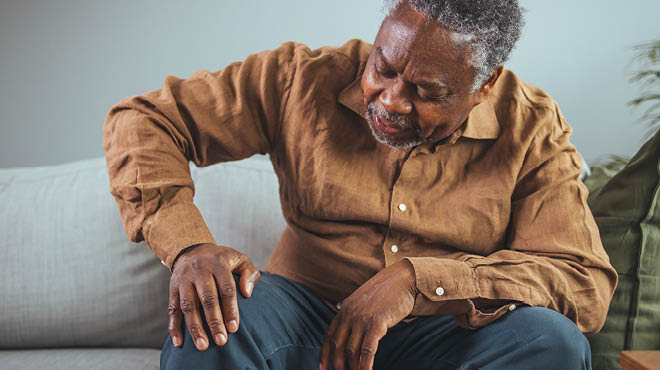
Conditions treated
Our Sports Medicine experts specialize in care for various conditions and injuries resulting from participating in athletics or living an active lifestyle. We also provide injury prevention and training plans to keep you moving safely.
-
Achilles tendon rupture
An Achilles tendon rupture is a sudden tear of the tendon that connects the calf muscles to the heel. This injury often occurs during sports or physical activity but can also happen during routine movement. Prompt evaluation is important to restore strength, mobility and function.
What the Achilles tendon does
The Achilles tendon allows you to push off the ground, rise onto your toes and control foot movement while walking or running. A rupture occurs when the tendon is overstressed, causing it to tear partially or completely — most often near where it attaches to the heel.
Common symptoms
People with an Achilles tendon rupture often notice:
- A sharp pain or popping sensation in the back of the ankle or calf.
- Swelling near the heel.
- Trouble walking, pushing off the foot or standing on toes.
If you experience sudden heel or calf pain with difficulty walking, seek medical care right away.
Causes and risk factors
Achilles tendon ruptures typically result from a sudden increase in force on the tendon. Risk is higher with:
- Sports involving running, jumping or quick direction changes.
- Rapid increases in activity level or intensity.
- Falls or unexpected missteps.
- Males between ages 30 and 40.
- Certain medications, including steroid injections or specific antibiotics.
- Excess body weight, which increases tendon strain.
Diagnosis
Your clinician will examine your lower leg and ankle and may perform simple movement tests to assess tendon function. Imaging, such as ultrasound or MRI, may be used to confirm the extent of the tear.
Treatments
Care is tailored to your activity level, overall health and injury severity. Both surgical and nonsurgical approaches can be effective.
Nonsurgical care may include:
- Temporary use of crutches.
- A walking boot or cast to limit ankle movement.
- Pain management and swelling control.
Surgical repair reconnects the torn tendon and may be recommended for younger or more active individuals. Minimally invasive techniques may reduce complication risk.
Recovery and rehabilitation
Physical therapy is essential after both surgical and nonsurgical treatment. Rehabilitation focuses on restoring strength, flexibility and balance. Many people return to normal activities within four to six months, though continued conditioning is important for long-term recovery.
-
Ankle pain and injury
-
Anterior cruciate ligament tear
An anterior cruciate ligament (ACL) injury occurs when the anterior cruciate ligament in the knee is stretched or torn. This ligament helps stabilize the knee and control movement between the thighbone and shinbone. ACL injuries often happen during sports or activities that involve sudden stops, quick direction changes, jumping or awkward landings—such as soccer, basketball, football and skiing. Many people notice immediate swelling, pain and a feeling that the knee is unstable.
Symptoms
Common signs of an ACL injury include:
- A popping sound or sensation in the knee at the time of injury.
- Sudden pain that limits activity.
- Rapid knee swelling.
- Reduced ability to fully bend or straighten the knee.
- A feeling that the knee may give out when standing or walking.
When to see a healthcare professional
Seek care right away for knee pain, swelling or instability after an injury. Early evaluation helps determine the severity of the injury and guides the most effective treatment plan.
Causes
ACL injuries typically occur when the knee is placed under sudden stress, such as:
- Quickly slowing down or changing direction.
- Pivoting on a planted foot.
- Landing awkwardly from a jump.
- Stopping suddenly.
- Direct contact or collision to the knee.
The ligament may be stretched, partially torn or completely torn.
Risk factors
Factors that may increase the risk of an ACL injury include:
- Participation in sports with cutting, pivoting or jumping.
- Muscle weakness or imbalance.
- Poor movement mechanics, such as knees collapsing inward.
- Improper footwear or sports equipment.
- Playing on artificial turf.
- Certain anatomical and biological differences that may increase risk in female athletes.
Prevention
Targeted training programs can help reduce the risk of ACL injuries. Prevention strategies focus on:
- Strengthening the legs, hips and core.
- Improving balance and body control.
- Learning proper jumping, landing and cutting techniques.
Sports medicine specialists and physical therapists can help develop personalized injury prevention plans.
Diagnosis
Diagnosis begins with a physical exam to assess knee swelling, stability and range of motion. Imaging tests may be used to confirm the injury or check for additional damage:
- X-rays to rule out bone fractures.
- MRI to evaluate ligaments, cartilage and other soft tissues.
- Ultrasound in select cases to assess muscles, tendons and ligaments.
Treatments
Nonsurgical treatment
Some ACL injuries can be treated without surgery. Treatment often includes physical therapy to reduce pain and swelling, restore movement and strengthen the muscles that support the knee. Bracing or crutches may be used temporarily.
Surgical treatment
Surgery may be recommended for people who:
- Want to return to sports or activities involving pivoting or jumping.
- Have ongoing knee instability.
- Have additional ligament or cartilage injuries
ACL reconstruction replaces the damaged ligament with a tendon graft, followed by structured rehabilitation to restore strength and stability.
Recovery and return to activity
Recovery time varies based on the severity of the injury and the treatment approach. Return to sports is based on strength, stability and movement control—not a set timeline. Full recovery may take several months to a year or longer, with careful testing before returning to high‑risk activities.
-
Arthritis
-
Concussion
A concussion is a traumatic brain injury that alters the way your brain functions. Although concussions usually are caused by a blow to the head, even a "ding," "getting your bell rung," or what seems to be a mild bump or blow to the head can be serious.
Signs and symptoms
- Headache or a feeling of pressure in the head.
- Temporary loss of consciousness.
- Confusion or feeling as if in a fog.
- Amnesia surrounding the traumatic event.
- Dizziness or "seeing stars".
- Ringing in the ears.
- Nausea or vomiting.
- Slurred speech.
Some symptoms of concussions may be immediate or delayed in onset by hours or days after injury:
- Concentration and memory complaints.
- Irritability and other personality changes.
- Sensitivity to light and noise.
- Sleep disturbances.
- Psychological adjustment problems and depression.
- Disorders of taste and smell.
When to seek medical care for a concussion
Be alert for symptoms that worsen over time. Your child or teen should be seen in an Emergency Department right away if they have:
- One pupil (the black part in the middle of the eye) larger than the other.
- Difficult to arouse.
- Severe headache or worsening headache.
- Weakness, numbness, or decreased coordination.
- Repeated vomiting or nausea.
- Slurred speech.
- Convulsions or seizures.
- Difficulty recognizing people or places.
- Increasing confusion, restlessness, or agitation.
- Unusual behavior.
- Loss of consciousness (even a brief loss of consciousness should be taken seriously).
-
Dislocation
A dislocation is an injury to your joint in which the ends of your bones are forced from their normal positions. Your shoulder and fingers are common locations for a dislocation to occur. Other common places for dislocation include your elbows, knees and hips.
Symptoms
You may experience tingling or numbness near or below the injury, such as in your foot for a dislocated knee or in your hand for a dislocated elbow.
If you have a dislocation, your joint may be:
- Immovable.
- Intensely painful.
- Swollen or discolored.
- Visibly deformed or out of place.
If you have a history of dislocations, we can provide you with options to help prevent this from recurring.
Diagnosis
A dislocation is diagnosed through a physical exam and imaging. Your clinician will evaluate the injured joint for swelling, pain, abnormal alignment, and limited motion. Blood flow and nerve function beyond the joint are also checked to identify possible complications. X‑rays are commonly used to confirm the dislocation and to look for fractures or other associated injuries.
Treatments
Treatment focuses on safely restoring joint alignment, reducing pain, and supporting recovery.
Joint realignment (reduction)
Most dislocations can be treated by carefully guiding the joint back into place. Pain‑relieving medication or a sedative may be used to improve comfort and relax surrounding muscles. Once the joint is repositioned, pain and visible deformity often decrease quickly.
Stabilization and support
After realignment, the joint may be protected with a brace, splint, or sling for a short time to limit movement and allow healing.
Surgical care
Surgery may be recommended if the joint remains unstable, dislocations occur repeatedly, or nearby nerves, blood vessels, or supporting tissues are damaged.
Rehabilitation
Physical therapy is often part of recovery. A guided rehabilitation program helps restore movement, strength, and joint stability while reducing the risk of future dislocations.
Most uncomplicated joint dislocations improve over several weeks with appropriate care. Returning to normal activity should wait until the joint moves comfortably, feels stable, and has regained strength.
Recovery and home care
After treatment, these steps can support healing:
- Rest the joint and avoid activities that stress or re‑injure it.
- Use ice during the first 1–2 days to reduce pain and swelling; heat may help ease stiffness later.
- Take pain medication as directed and stop when symptoms improve, unless advised otherwise.
- Begin gentle movement when recommended to prevent stiffness and support recovery.
- Continue strengthening exercises after healing to help protect the joint long term.
Your care team can help create a recovery plan based on the joint involved and your activity goals.
-
Elbow pain and injury
-
Foot pain and injury
-
Fractures and trauma
-
Hand pain and injury
-
Hip pain and injury
-
Knee pain and injury
-
Meniscus tear
A torn meniscus is a common knee injury that affects the cartilage cushioning the joint between the thighbone and shinbone. It often occurs when the knee twists or rotates while bearing weight. Meniscus injuries can cause pain, swelling, and limited movement, making everyday activities difficult without proper care.
Symptoms
Meniscus tear symptoms may appear right away or develop over several hours. Common signs include knee pain, swelling, stiffness, or difficulty fully straightening the leg. Some people notice a popping sensation at the time of injury or feel like the knee catches, locks, or gives out.
When to seek care
Schedule an appointment if knee pain or swelling doesn’t improve, limits your movement, or interferes with work, sports, or daily life. Early evaluation helps guide the right treatment and protects long-term joint health.
Causes and risk factors
Meniscus tears often happen during sports or activities that involve pivoting, sudden stops, or quick changes in direction. They can also occur with deep squatting, kneeling, or lifting. As cartilage naturally wears down with age, older adults may experience tears with minimal or no injury. Excess body weight and repetitive knee stress can increase risk.
Possible complications
Without treatment, a torn meniscus can lead to ongoing knee pain, instability, reduced mobility, and a higher risk of developing arthritis in the affected joint.
Diagnosis
Your care team will evaluate your knee through a physical exam and may recommend imaging to confirm the diagnosis.
- X-rays help rule out bone-related conditions.
- MRI scans provide detailed images of cartilage and are commonly used to detect meniscus tears.
In some cases, a minimally invasive procedure called arthroscopy may be used to both diagnose and treat the injury.
Treatments
Nonsurgical treatment
Many meniscus tears improve without surgery. Treatment often starts with:
- Activity modification and rest.
- Ice to reduce swelling.
- Over-the-counter pain relief.
- Physical therapy to strengthen muscles and support knee stability.
Surgical care when needed
If pain continues or the knee becomes locked or unstable, surgery may be recommended. Depending on the tear, the meniscus may be repaired or the damaged portion carefully trimmed using minimally invasive techniques. Rehabilitation focuses on restoring strength, motion, and confidence in the knee.
For advanced joint damage, knee replacement may be considered. In select younger patients without arthritis, meniscus transplant surgery may be an option.
-
Rotator cuff injury
A rotator cuff injury affects the muscles and tendons that stabilize the shoulder and allow you to lift and rotate your arm. When these tissues become irritated or torn, shoulder pain, weakness and limited movement can occur — often worsening at night or during overhead activity.
Rotator cuff injuries are common, especially as we age, and may also develop sooner in people with physically demanding jobs or sports that require repeated arm motion. At Mayo Clinic Health System, many rotator cuff injuries are treated successfully without surgery through personalized rehabilitation and activity modification.
Symptoms
Signs of a rotator cuff injury may include:
- Persistent shoulder discomfort, often felt deep in the joint.
- Pain that interferes with sleep.
- Difficulty reaching overhead or behind your back.
- Weakness in the shoulder or arm.
Some tears cause little pain at first but can worsen over time if untreated.
When to Seek Care
Ongoing shoulder pain or limited movement should be evaluated by a healthcare professional. Seek care promptly if you experience sudden weakness, loss of function or pain following a fall or injury.
Causes and risk factors
Most rotator cuff injuries develop gradually from tendon wear and repeated strain. Others occur suddenly from trauma, such as a fall or accident.
Factors that increase risk include:
- Age, particularly over 50.
- Repetitive overhead work or heavy lifting.
- Sports such as baseball, tennis or weight training.
- Family history of shoulder problems.
Diagnosis
Diagnosis begins with a physical exam to assess strength, movement and pain. Imaging may be recommended to better understand the injury, including X‑ray, ultrasound or MRI, depending on symptoms and severity.
Treatments
Many rotator cuff injuries improve with conservative care. Your care team will recommend a treatment plan based on your condition, activity level and goals.
Nonsurgical care may include:
- Physical therapy to improve strength and flexibility.
- Activity modification and pain management strategies.
- Injections to reduce inflammation when pain limits daily function.
Surgical treatment may be recommended for significant tears or injuries that do not improve with therapy. Options range from minimally invasive arthroscopic repair to shoulder replacement in severe cases.
Self‑care and recovery
Mild shoulder pain may improve with rest, ice and avoiding activities that worsen symptoms. Over‑the‑counter pain relievers can help manage discomfort. If pain persists or limits daily activities, evaluation by an orthopedic or sports medicine specialist is recommended.
-
Shoulder pain and injury
-
Sprains
A sprain occurs when a ligament, the strong tissue that stabilizes a joint, is overstretched or torn. Sprains most often affect the ankle but can also involve the knee, wrist, thumb or other joints. Many sprains heal with conservative care, while more severe injuries may need advanced treatment to restore joint stability and function.
Symptoms
Symptoms depend on the joint involved and the extent of the injury. You may notice:
- Pain or tenderness around the joint.
- Swelling or bruising.
- Stiffness or limited movement.
- A popping sensation at the time of injury.
When to get care for sprains
Some sprains can be managed at home, but medical evaluation is important if you:
- Can’t move the joint or put weight on it.
- Have pain that feels deep or focused over a bone.
- Experience numbness, tingling or worsening swelling.
These symptoms may indicate a fracture or more serious joint injury.
How sprains happen
Sprains occur when a joint is forced beyond its normal range of motion. Common causes include:
- Rolling or twisting the ankle on uneven ground.
- Sudden pivoting during sports or exercise.
- Falling onto an outstretched hand.
- Forceful bending of the thumb during athletic activity.
In children, growth plates are more vulnerable than ligaments, making fractures more common than sprains.
Risk factors
You may be more likely to experience a sprain if you:
- Exercise or work on slippery or uneven surfaces.
- Are fatigued, reducing joint control and muscle support.
- Wear shoes or equipment that lack proper support.
Prevention
Regular strengthening, stretching and balance exercises can help protect joints and reduce injury risk. Wearing supportive footwear and using appropriate safety gear are also important.
If you’ve had a prior sprain, targeted exercises to strengthen the surrounding muscles can improve joint stability and help prevent repeat injuries. A physical therapist can guide a personalized prevention plan.
Diagnosis
Your healthcare professional will evaluate the joint for swelling, tenderness and stability. Imaging tests, such as X‑rays, may be used to rule out broken bones. In certain cases, an MRI can help determine the extent of ligament damage.
Treatments
Most sprains are treated without surgery. Early care typically includes:
- Rest: Avoid painful activities while maintaining gentle movement.
- Ice: Apply cold packs to help control swelling.
- Compression: Use a supportive wrap to reduce inflammation.
- Elevation: Raise the injured area to limit swelling.
Pain‑relief medications may be recommended for comfort.
As symptoms improve, gradual movement and strengthening help restore function. Healing time varies from days to months, depending on injury severity.
Physical therapy may be recommended to rebuild strength, flexibility and balance. Bracing or splinting can provide support during recovery. Surgery may be considered for severe ligament injuries that do not respond to nonsurgical treatment.
-
Tennis elbow
Tennis elbow is a painful condition caused by irritation of the tendons that connect forearm muscles to the outside of the elbow. It most often develops from repeated arm, wrist or hand motions over time — not from a single injury. Although the name suggests a sports-related issue, tennis elbow is more commonly linked to work duties, hobbies or daily activities that involve gripping, lifting or twisting.
Pain usually begins on the outer elbow and may extend into the forearm or wrist. Symptoms can make routine tasks uncomfortable, including lifting objects, turning handles or holding items for long periods.
Symptoms
- Tenderness or aching on the outside of the elbow.
- Weak grip strength.
- Pain with lifting, twisting or repetitive hand use.
When to seek care
If elbow pain continues despite rest, ice and nonprescription pain relievers, schedule an evaluation with a Mayo Clinic Health System care team. Ongoing discomfort, weakness or limited use of the arm may require targeted treatment to prevent further tendon damage.
Causes
Tennis elbow develops when repetitive stress places strain on the forearm tendons, leading to small areas of tendon breakdown.
Activities that may increase risk include:
- Repetitive tool use or manual labor.
- Painting or home improvement tasks.
- Frequent computer or mouse use.
- Food preparation requiring repeated cutting.
- Racket sports, especially with improper technique.
In some cases, symptoms occur without a clear cause.
Risk factors
You may be more likely to develop tennis elbow if you:
- Are between ages 30 and 60.
- Perform repetitive arm or wrist motions at work.
- Participate in racket sports without proper form or equipment.
- Smoke or have excess body weight.
Diagnosis
Tennis elbow is typically diagnosed through a physical exam and review of symptoms. Your care team may ask you to move your arm or apply gentle resistance to identify pain patterns. Imaging tests may be used if another condition is suspected.
Treatments
Most people improve with nonsurgical care focused on pain relief and tendon healing.
Therapy and rehabilitation for tennis elbow
Physical, occupational or hand therapy helps strengthen forearm muscles, improve flexibility and reduce strain on the tendon. Activity modification and supportive bracing may also be recommended.
Advanced treatments
If symptoms persist, options may include targeted injections, ultrasound-guided procedures, shock wave therapy or, in select cases, surgery to remove damaged tendon tissue.
A guided rehabilitation program is essential for restoring strength and function after treatment.
Self-care at home for tennis elbow
- Rest the arm and avoid painful activities.
- Apply ice for short periods several times daily.
- Use over-the-counter pain relievers as directed.
- Gradually return to activities with proper technique.
Diagnosis & treatments
We specialize in diagnosis and treatment of conditions and injuries resulting from participating in sports or living an active lifestyle. We also provide community services and injury prevention and training plans to keep you moving safely.
Services and treatments we provide include:
- Athletic training
- Community event medical coverage
- Concussion evaluation and management
- Emergency action plan development
- High school outreach
- ImPACT baseline testing and education
- Injections for joint pain
- Injury prevention and education
- Performance training
- Physical therapy
- Surgery
- Sway balance testing
Care team
Our experienced team of specialists collaborate to deliver a seamless experience — from diagnosis to treatment and recovery — so you can get back in action.
Our specialists include:
- Athletic trainers.
- Foot doctors (podiatrists).
- Hand surgeons.
- Hip surgeons.
- Orthopedic doctors.
- Orthopedic surgeons.
- Pediatric orthopedic surgeons.
- Physical therapists.
- Rehabilitation therapists.
- Shoulder pain doctors.
- Trauma surgeons.
Additional care and therapies may be provided by:


Orthopedics & Orthopedic Surgery (Bones), Sports Medicine

Physical Therapy, Sports Medicine

Orthopedics & Orthopedic Surgery (Bones), Physical Medicine & Rehabilitation, Spine Care, Sports Medicine
Locations View all Sports Medicine locations

Mankato, MN
Hospital and Clinic- Call for appointment
- Mon-Fri:7:00 AM - 7:00 PM
- 507-594-7474

New Prague, MN
Hospital- Call for appointment
- Mon-Fri:7:00 AM - 7:00 PM
- 507-594-7474

La Crosse, WI
Clinic- Call for appointment
- 608-392-9876

Eau Claire, WI
Imaging & Sports Medicine Center- After hours call 715-838-3311
- Call for appointment
- Mon-Fri:7:00 AM - 7:00 PM
- 715-838-6161
FAQ
-
Do you offer an athletic program in Eau Claire?
If you are a physically active athlete in a youth, high school, or college setting, our athletic trainers can help you by providing immediate injury care, follow-up injury treatment, prevention education, and rehabilitative services.
Our staff can be found throughout the Chippewa Valley and surrounding communities, providing care at those schools as well as working together with our orthopedics and sports medicine providers.
What is an athletic trainer?
Athletic trainers (ATs) are multi-skilled healthcare professionals who collaborate with physicians to provide preventive services, emergency care, clinical diagnosis, therapeutic intervention, and rehabilitation of injuries and medical conditions.
More than 70 percent of athletic trainers have at least a master’s degree and received formal instruction in:
- Assessment of injury/illness.
- First aid and emergency care.
- Human anatomy and physiology.
- Injury/illness prevention.
- Nutrition.
- Rehabilitation.
- Therapeutic modalities All athletic trainers are:
- Certified by the Board of Certification for the Athletic Trainer (BOC).
- Licensed with the Wisconsin Board of Medical Practice.
- Members of the National Athletic Trainers Association.
- Members of the Wisconsin Athletic Trainers Association.
Classroom learning is enhanced through clinical education experiences. Visit the National Athletic Trainers Association (NATA) for more information about the athletic training profession.
About athletic training
Our athletic trainers provide the following services across the region:
- Clinical support to our orthopedic physician teams and general patient care.
- Educational programs for teams, parents, coaches, and community members.
- Industrial program opportunities (future state).
- Injury prevention services catered to a team's specific needs.
- On-site medical coverage for events and team practice and competition.
- Sports-related concussion evaluation and management, including ImPACT baseline and SWAY balance testing.
Community event coverages
Our team of athletic trainers can service your community athletic event, competition or tournament.
Services we provide include:
- Coordinate care and referrals to Mayo Clinic Health System concussion program, physical therapy, orthopedics and sports medicine.
- Emergency action plan development, supported by the National Athletic Trainers Association (NATA).
- Evaluation, treatment, management and follow-up of acute and chronic injuries.
- Healthy Roster — HIPAA compliant electronic medical record that allows for collaboration in athlete status updates with athletic trainers, parents, athletes, coaching staff, and school administration.
- Injury prevention and education to athletes, coaching staff, and school administration.
- Prophylactic taping, as needed.
Services provided are in the scope of practice for an athletic trainer, as well as facilitation of medical care for urgent and nonurgent needs beyond the scope of an athletic trainer. Services will be subject to fair market value for athletic training service in the Chippewa Valley region and billed on an hourly basis or other contracted amounts determined.
Concussion guidelines
Parents, coaches and children involved in school-sponsored athletics and youth sports are required by Wisconsin state law to receive concussion-related information on the signs, symptoms, and risks of sports.
The law also provides that parents, coaches, and athletes sign a statement declaring they have received and understand the information. This information will be shared with all students and their families participating in Healthy Roster.
Concussion links:
- Wisconsin Act 172: Youth Athlete Concussion Law.
- National Federation of State High School Associations: Suggested Guidelines for Management of Concussion in Sports.
High school outreach
The Orthopedics and Sports Medicine Programs in Eau Claire can provide event coverage and regular visits to your school during practice, or as determined by the contracting school administration.
Our team of athletic trainers can provide the following services to high school and college athletes:
- Annual concussion, functional, baseline and general medical evaluation and assessment, including ImPACT baseline and SWAY balance testing.
- Coordinate care and referrals to Mayo Clinic Health System concussion program, physical therapy, orthopedics and sports medicine.
- Emergency action plan development, supported by the National Athletic Trainers Association (NATA).
- Evaluation, treatment, management and follow-up of acute and chronic injuries.
- Healthy Roster — HIPAA compliant electronic medical record that allows for collaboration in athlete status updates with athletic trainers, parents, athletes, coaching staff, and school administration.
- Injury prevention and education to athletes, coaching staff, and school administration.
- On-site medical coverage for events and team practice and competition.
- Support of internal strength conditioning and performance activities.
- We can provide additional performance training in collaboration with physical therapy as requested.
Coverage provided is based on sport-specific injury rates, injury potential, regional coverage rates, and as schedule allows.
Email or call Jeremy Amundson at 715-838-6453 for more information.
Impact testing
We utilize ImPACT applications to provide baseline and post-injury testing for individuals age 5-80 years old. ImPACT stands for Immediate Post-Concussion Assessment and Cognitive Testing and is an objective tool to support trained healthcare providers in making sound return-to-activity decisions following a concussion. ImPACT testing provides an objective measure of verbal and visual learning and memory, processing speed, reaction time, and attention.
ImPACT has two primary uses:
- Before the onset of an activity, a baseline test is conducted to measure the athlete’s performance baseline.
- In the event of an injury, a post-injury test is administered and compared to the baseline and/or normative data scores.
Baseline testing
Ideally, baseline testing is completed prior to the start of an athletic season or before a concussion occurs. If the athlete or patient sustains a concussion, post-injury ImPACT results can be compared to their baseline scores. Mayo Clinic Health System recommends baseline testing for all athletes. Post-injury ImPACT tests can still be useful without baseline data because of normative data to compare to.
Baseline and post-injury tests should always be administered and interpreted by healthcare providers trained in the use of test and concussion management. Mayo Clinic recommends baseline testing middle school and high school athletes every one to two years, depending on neurological development and injury history. NCAA athletes are required to complete annual testing.
Scheduling a baseline test
All schools will have the opportunity to complete annual baseline testing at their school through our athletic training services agreement. The cost of each test is $20.
- Testing for athletes ages 12-80 are performed on a desktop computer. At-home baselines can be shared and coordinated via a virtual visit.
- Testing for athletes ages 5-11 are performed on an iPad.
- Athletes and parents will meet with an ImPACT-trained athletic trainer (ITAT) to discuss the following:
- Administration of the test
- Brief review of the results and what they mean
- Discussion on concussion recognition, management, and resources
- Medical history
What to do in the event of an injury
Your child's coach or athletic director will know the athletic trainer that's assigned to your child and how to contact him or her in the event of an injury/ If your child's injury is minor one day, but gets worse the next, call your athletic trainer or schedule an appointment via the Healthy Roster application. The athletic trainer can help determine what type of visit or medical care is advised.
If there is concern of significant injury or issue, seek medical care as soon as possible. Inform the provider that your child is an athlete at a Mayo Clinic-covered high school so that the necessary release of information can be completed and communication can be sent to your athletic trainer.
If athletes are seen by a physician, contact the athletic training staff so they can facilitate communication between the physician and coaches to assure proper treatment and return-to-play guidelines are met. A written release will be required from the physician to their coach or athletic trainer in order to return to participation. This release is a Wisconsin Interscholastic Athletic Association (WIAA) requirement, and is the only documentation that confirms a student athlete is cleared to participate.
Injuries that occur at school
Injuries that occur at school, practice, or games should be reported to school personnel, athletic trainers and coaching staff as soon as possible so that an injury report can be filed. Our athletic trainers will evaluate the injury and decide on the most appropriate plan of action, treatment or referral.
Injuries that occur on the road
If the athletic trainer isn't present at the game, the athlete or parent should report the injury to the coach immediately. If an athletic trainer is present, report the injury and name of your athletic trainer to the opposing team's athletic trainer and your coach.
The opposing team's athletic trainers can provide basic medical care as needed and make final return-to-play decisions. Injuries reported by coaches or parents via Healthy Roster will be followed up in less than 24 hours by your athletic trainer.
-
Do you offer an athletic program in La Crosse and Onalaska?
Through our Sports Medicine Program. licensed athletic trainers (L.A.T.) provide athletic outreach services to area college athletes. They evaluate injuries sustained by athletes during school-sponsored athletic programs. This includes care of acute injuries, management of chronic injuries, follow-up rehabilitation and consultation for injury prevention.
La Crosse and Onalaska trainers provide:
- Weekly consultations with student-athletes at their assigned schools when school is in session.
- Coverage at select home games. Contact sports take priority when there are schedule conflicts, The school’s athletic director assists with prioritization of event coverage when needed.
- Communication between the athlete’s coach, athletic trainer, physical therapist or physician will occur as appropriate to ensure continuity of care.
-
Do you offer an athletic program in Mankato?
Through our Sports Medicine program, licensed athletic trainers (L.A.T.) provide athletic outreach services to area high school and college athletes. They evaluate injuries sustained by athletes during school-sponsored athletic programs. This includes care of acute injuries, management of chronic injuries, follow-up rehabilitation and consultation for injury prevention.
Mankato trainers provide:
- Weekly consultations with student-athletes at their assigned schools when school is in session.
- Coverage at select home games. Contact sports take priority when there are schedule conflicts. The school’s athletic director assists with prioritization of event coverage when needed.
- Communication between the athlete’s coach, athletic trainer, physical therapist or physician will occur as appropriate to ensure continuity of care.
For more information on our licensed athletic training services, contact Troy Hoehn, L.A.T., A.T.C.
-
Do you provide sports performance services?
Sports performance and injury prevention is offered in Eau Claire.
Our team consists of Sports Medicine physical therapists with specialized training from the American Board of Physical Therapy Specialties and National Strength and Conditioning Association. They employ the latest sports medicine equipment in Eau Claire to deliver superior injury prevention and rehab methods, teaching athletes of all ages across various levels.
Our physical therapy group takes a personalized and comprehensive stance on improving agility, endurance, mobility, power, speed, strength, as well as considering sleep, nutrition, and overall wellness. This strategy aims to enhance function, reduce pain, avert additional injuries, boost performance, and facilitate a return to activities.
Specialty services we provide include:
- Running analysis
- Throwing analysis
- Golf Swing analysis
- Performance enhancement
Treatment techniques we provide include:
- Therapeutic exercise
- Neuromuscular reeducation
- Pain neuroscience education
- Manual therapy
- Modalities:
- Dry needling
- Shockwave therapy
- Kinesio taping
- Electrical stimulation
- Iontophoresis
-
What should I expect during my first appointment, and what should I bring?
Your first appointment will include a full history evaluation. Imaging may be needed to support the diagnosis or determine next steps in your treatment plan. Depending on your needs, our nursing team may review presurgical recommendations or teach you how to care for a cast, brace or splint.
Appointment times vary depending on your symptoms or condition. Most initial appointments take at least 30 minutes.
Bring any imaging or medical records from non-Mayo Clinic Health System facilities. Complete a medical records release form (PDF) to authorize the transfer of health records from another healthcare facility to us. Visit our Medical Record Forms page to grant permission for others to access your protected health information or request a change to your health record.
-
What are my payment options and do you offer financial assistance?
Our Patient Account Services representatives can assist you with any issues related to billing and insurance. We also offer financial assistance if you are unable to pay for care due to financial hardship.
-
Can you provide a second opinion?
Yes. Simply call your preferred Sports Medicine location to schedule an appointment.
-
What follow-up care do you provide after treatment?
We offer customized rehabilitation to match your needs. Our goal is to help you remain as active as possible at any age. We'll work with you to help you understand your condition and provide you with the tools and resources to manage it. We partner with our expert colleagues in Physical Therapy and Occupational Therapy to initiate these plans.
-
Do you have an after-hours number in case of emergency?
Always call 911 in case of an emergency. For after-hours help with other issues, get virtual care 24/7 through the Primary Care On Demand app or review our convenient care options.