• Patient Portal
  • Pay Bill
  • Request Appointment
MCHS_Logo_2024_BLACK
    • Cardiology (Heart)
    • Gastroenterology & Hepatology (Digestive Care)
    • Neurosurgery
    • Obstetrics & Gynecology (OB-GYN)
    • Oncology (Cancer)
    • Orthopedics & Orthopedic Surgery (Bones)
    • Primary Care
    • Spine Care
    • Sports Medicine
    • Virtual Care 24/7
    View all specialties
  • Providers
  • Minnesota

    • Albert Lea
    • Austin
    • Blooming Prairie
    • Butterfield
    • Cannon Falls
    • Fairmont
    • Faribault
    • Lake City
    • Mankato
    • New Prague
    • Northfield
    • Owatonna
    • Plainview
    • Red Wing
    • Sherburn
    • St. James
    • Waseca
    • Zumbrota

    Wisconsin

    • Arcadia
    • Barron
    • Bloomer
    • Chetek
    • Chippewa Falls
    • Eau Claire
    • Ellsworth
    • Glenwood City
    • Holmen
    • La Crosse
    • Menomonie
    • Mondovi
    • Onalaska
    • Osseo
    • Prairie du Chien
    • Rice Lake
    • Sparta
    • Tomah
    mchsmap Map view
    • VirtualCare
      Virtual Care
    • SameDayCare
      Same-Day Care
    • PrimaryCare
      Primary Care
    • SpecialtyCare
      Specialty Care
    • View all care options
    • PrimaryCare
      Billing & Insurance
    • SameDayCare
      Financial Assistance
    • VirtualCare
      Price Transparency
    • Hometown Health
    • Classes & Events
    • Self-guided wellness programs
    • Mayo Clinic Connect
    • Community Resources
  • Patient Portal
  • Pay Bill
  • Request Appointment
MCHS_Logo_2024_BLACK
Search Mayo Clinic Health System
    • Cardiology (Heart)
    • Gastroenterology & Hepatology (Digestive Care)
    • Neurosurgery
    • Obstetrics & Gynecology (OB-GYN)
    • Oncology (Cancer)
    • Orthopedics & Orthopedic Surgery (Bones)
    • Primary Care
    • Spine Care
    • Sports Medicine
    • Virtual Care 24/7
    • View all specialties
  • Providers
    • Minnesota

    • Albert Lea
    • Austin
    • Blooming Prairie
    • Butterfield
    • Cannon Falls
    • Fairmont
    • Faribault
    • Lake City
    • Mankato
    • New Prague
    • Northfield
    • Owatonna
    • Plainview
    • Red Wing
    • Sherburn
    • St. James
    • Waseca
    • Zumbrota

      Wisconsin

    • Arcadia
    • Barron
    • Bloomer
    • Chetek
    • Chippewa Falls
    • Eau Claire
    • Ellsworth
    • Glenwood City
    • Holmen
    • La Crosse
    • Menomonie
    • Mondovi
    • Onalaska
    • Osseo
    • Prairie du Chien
    • Rice Lake
    • Sparta
    • Tomah
    • Map view
    • Virtual Care
    • Same-Day Care
    • Primary Care
    • Specialty Care
    • View all care options
    • Billing & Insurance
    • Financial Assistance
    • Price Transparency
    • Hometown Health
    • Classes & Events
    • Self-guided wellness programs
    • Mayo Clinic Connect
    • Community Resources

Recent Posts

  • ColdfluRSV blog photo
    Speaking of Health
    When to seek care for cold, flu and RSV
    March 10, 2026
  • winter outdoor lady and girl 660x370
    Speaking of Health
    Is your sinus pressure a sinus infection?
    February 09, 2026
  • Izzy Iverson
    Patient Stories
    Unexpected vacation ending leads to rare tumor discovery
    February 05, 2026
Featured Topics
  • Behavioral Health
  • Cancer
  • Children's Health (Pediatrics)
  • Exercise and Fitness
  • Heart Health
  • Men's Health
  • Neurosurgery
  • Obstetrics and Gynecology
  • Orthopedic Health
  • Weight-loss (Bariatric) Surgery
  • Women's Health
Speaking of Health
Monday, March 7, 2022

Polyps: Colon cancer culprits

Topics in this Post
  • Colorectal Health
  • Gastrointestinal Health
Hand and eye neck tattoo

Colon cancer is the third most common cancer diagnosed in the U.S., with about 50,000 people dying each year from this disease. Polyps are one of the key culprits in colon cancer. Since they don't often cause symptoms, it's important to have regular screening tests, such as a colonoscopy. Polyps found in the early stages usually can be removed safely and completely.

In this Q&A, learn more about polyps:

1. What is a polyp?

Typically, a polyp is an abnormal growth in the lining of the colon that protrudes into the colon. The colon is made up of four layers, and polyps can be made of more than one layer.

Screening methods like a colonoscopy or flexible sigmoidoscopy can directly visualize polyps, while stool testing checks for the presence of blood or abnormal DNA shed by these polyps.

2. Why do polyps form?

Polyps form when the body's methods for controlling cell growth falter. Polyps don't develop for any one reason. However, certain mutations need to happen for a polyp to develop. Polyps can become cancerous.

Some people may be predisposed to developing a polyp. It could be genetics or chronic injury to a cell from conditions like ulcerative colitis or Crohn’s disease. Lifestyle also can affect polyp development, including eating foods like red meat, smoking tobacco and drinking alcohol.

3. Are all polyps precancerous?

Not all polyps are precancerous or cancerous. Sometimes the nature of a polyp can be distinguished based on how it looks during a colonoscopy. But only removal for examination under a microscope by a pathologist can accurately determine if a polyp is precancerous.

4. What are precancerous polyps?

Precancerous polyps are those that can become cancerous over time if they aren't removed. The most common polyps are tubular adenomas, sessile serrated adenomas and hyperplastic polyps. These names are based on what the polyps' cells look like under a microscope. Tubular and sessile serrated adenomas generally are considered precancerous.

5. If polyps are taken out, do I need another colonoscopy?

Yes. Even if your colonoscopy showed no polyps or if all polyps were taken out, you can still develop new polyps in the future. That's why it's important to have a colonoscopy whenever your health care professional recommends it. The timing of your next colonoscopy usually depends on the number and size of the polyps removed.

6. When should I get screened?

Most people should begin screening for colorectal cancer after turning 45 and then continue getting screened at regular intervals.

However, you may need to be tested earlier than 45, or more often than others, if:
  • You or a close relative have had colorectal polyps or colorectal cancer.
  • You have an inflammatory bowel disease, such as Crohn’s disease or ulcerative colitis.
  • You have a genetic syndrome such as familial adenomatous polyposis (FAP) or hereditary nonpolyposis colorectal cancer (Lynch syndrome).

By Mayo Clinic Health System staff.

Topics in this Post
  • Colorectal Health
  • Gastrointestinal Health

Related Posts

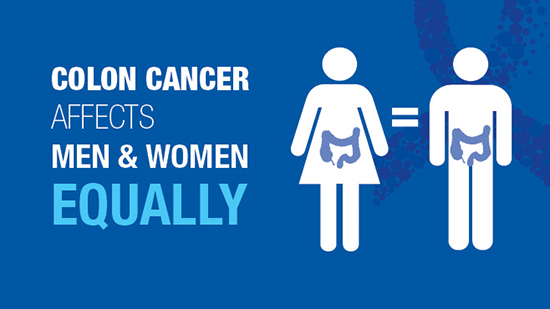
Colon cancer affects men and women equally What to expect before, during a colonoscopy
45 or older? Talk with your doctor about colon cancer screening. Understanding your colon cancer screening options
Dog and woman sitting together Benefits of sedation-free colonoscopy
Mayo Clinic Health System
About Us
Careers
Volunteer
Donate
Contact Us
Patient Care
Patients & Visitors
Classes & Events
Mayo Clinic Connect
Mayo Clinic
Resources
Referrals
Community Resources
Financial Assistance
Price Transparency
Compliance
Notice of Nondiscrimination
Notice of Privacy Practices
No Surprises Act
Terms of Use
Manage Cookie
Privacy Policy
© 2018 - 2026 Mayo Clinic Health System