• Patient Portal
  • Pay Bill
  • Request Appointment
MCHS_Logo_2024_BLACK
    • Cardiology (Heart)
    • Gastroenterology & Hepatology (Digestive Care)
    • Neurosurgery
    • Obstetrics & Gynecology (OB-GYN)
    • Oncology (Cancer)
    • Orthopedics & Orthopedic Surgery (Bones)
    • Primary Care
    • Spine Care
    • Sports Medicine
    • Virtual Care 24/7
    View all specialties
  • Providers
  • Minnesota

    • Albert Lea
    • Austin
    • Blooming Prairie
    • Butterfield
    • Cannon Falls
    • Fairmont
    • Faribault
    • Lake City
    • Mankato
    • New Prague
    • Northfield
    • Owatonna
    • Plainview
    • Red Wing
    • Sherburn
    • St. James
    • Waseca
    • Zumbrota

    Wisconsin

    • Arcadia
    • Barron
    • Bloomer
    • Chetek
    • Chippewa Falls
    • Eau Claire
    • Ellsworth
    • Glenwood City
    • Holmen
    • La Crosse
    • Menomonie
    • Mondovi
    • Onalaska
    • Osseo
    • Prairie du Chien
    • Rice Lake
    • Sparta
    • Tomah
    mchsmap Map view
    • VirtualCare
      Virtual Care
    • SameDayCare
      Same-Day Care
    • PrimaryCare
      Primary Care
    • SpecialtyCare
      Specialty Care
    • View all care options
    • PrimaryCare
      Billing & Insurance
    • SameDayCare
      Financial Assistance
    • VirtualCare
      Price Transparency
    • Hometown Health
    • Classes & Events
    • Self-guided wellness programs
    • Mayo Clinic Connect
    • Community Resources
  • Patient Portal
  • Pay Bill
  • Request Appointment
MCHS_Logo_2024_BLACK
Search Mayo Clinic Health System
    • Cardiology (Heart)
    • Gastroenterology & Hepatology (Digestive Care)
    • Neurosurgery
    • Obstetrics & Gynecology (OB-GYN)
    • Oncology (Cancer)
    • Orthopedics & Orthopedic Surgery (Bones)
    • Primary Care
    • Spine Care
    • Sports Medicine
    • Virtual Care 24/7
    • View all specialties
  • Providers
    • Minnesota

    • Albert Lea
    • Austin
    • Blooming Prairie
    • Butterfield
    • Cannon Falls
    • Fairmont
    • Faribault
    • Lake City
    • Mankato
    • New Prague
    • Northfield
    • Owatonna
    • Plainview
    • Red Wing
    • Sherburn
    • St. James
    • Waseca
    • Zumbrota

      Wisconsin

    • Arcadia
    • Barron
    • Bloomer
    • Chetek
    • Chippewa Falls
    • Eau Claire
    • Ellsworth
    • Glenwood City
    • Holmen
    • La Crosse
    • Menomonie
    • Mondovi
    • Onalaska
    • Osseo
    • Prairie du Chien
    • Rice Lake
    • Sparta
    • Tomah
    • Map view
    • Virtual Care
    • Same-Day Care
    • Primary Care
    • Specialty Care
    • View all care options
    • Billing & Insurance
    • Financial Assistance
    • Price Transparency
    • Hometown Health
    • Classes & Events
    • Self-guided wellness programs
    • Mayo Clinic Connect
    • Community Resources
Posted By
Kariline Bringe, M.D.

Kariline Bringe, M.D.

Orthopedics & Orthopedic Surgery (Bones)

Recent Posts

  • Betty Tauscher
    Patient Stories
    Digging into garden after robotic total knee replacement
    June 01, 2022
  • Person holding leg joint
    Speaking of Health
    What you need to know about aching joints
    January 07, 2022
Featured Topics
  • Behavioral Health
  • Cancer
  • Children's Health (Pediatrics)
  • Exercise and Fitness
  • Heart Health
  • Men's Health
  • Neurosurgery
  • Obstetrics and Gynecology
  • Orthopedic Health
  • Weight-loss (Bariatric) Surgery
  • Women's Health
Speaking of Health
Thursday, January 5, 2023

Walk like a penguin: Keeping your winter balance
Topics in this Post
  • Safety
  • Orthopedic Health
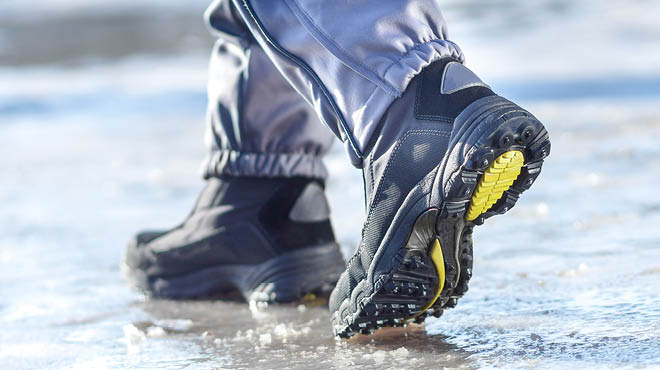
Walking on ice wearing boots

When winter storms hit, good balance can prevent falls and injuries — ranging from broken arms, legs or hips to back injuries and concussions.

The National Center for Injury Prevention and Control says slips and falls are the leading cause of nonfatal injury across all age groups, except the 10–24 group. One in every 5 falls results in a serious injury, such as head trauma or broken bones. That’s more than 800,000 people being hospitalized each year.

To remain upright and steady, the even distribution of weight over your feet is vital. Many parts of your body play key roles in your balance. Muscles, bones, joints, eyes, the balance organ in the inner ear, nerves, heart and blood vessels must work normally to maintain your balance. When these systems aren't functioning well, balance problems can arise.

Keeping your balance no matter the weather

Your arms are one of the greatest aids in maintaining your balance, especially when it's icy. Start with your hands, and wear gloves. Gloves keep your hands warm and out of your pockets, which frees up your arms so you can extend them out from your sides to improve your ability to stay upright.

Your feet also aid in balance. Assume that all wet, dark areas on pavements are slippery and icy. Slow down, take short, careful steps at first, and then adjust your pace to surface conditions. Or walk like a penguin. Point your feet slightly outward, and put your center of gravity directly over your feet as much as possible.

Other tips to tackle tricky walking conditions include:

  • Use a backpack or a cross-body bag when carrying something to free up your hands. If you need to carry groceries or heavy bags, take them one at a time.
  • Wear winter assistive devices with built-in grippers over your shoes or boots. Or wear lace-up shoes that fit well and have deep-grooved, nonskid, rubber treads.
  • Wipe your shoes and boots thoroughly on the floor mat when coming inside.
  • Use a cane or walking poles when out in winter weather.
  • Avoid texting when walking on snow or ice. It can be an accident waiting to happen.
  • Get in and out of your vehicle slowly, holding onto the door and steering wheel while stepping on or off a slippery surface.

Getting back on your feet

If you do fall, make sure you're not injured. Then, roll onto your hands and knees. Take one foot and place it between your hands, then bring the other foot between your hands. Keep your feet shoulder-width apart, and push yourself up from there.

If you think you might be hurt or are unsure if an injury is serious, seek medical care immediately.

Once you've recovered, think back on the fall and ask yourself: "What was I doing?" and "What could I have done differently to help prevent that fall from happening?"

Kariline Bringe, M.D., is an orthopedic surgeon in La Crosse, Wisconsin.
Topics in this Post
  • Safety
  • Orthopedic Health

Related Posts

Standing outside in winter How to avoid winter slips and falls
Prescription bottle emptying capsules into hand Over-the-counter, prescription medication safety
Therapy at home video visit Video visits help therapy patients recover at home
Mayo Clinic Health System
About Us
Careers
Volunteer
Donate
Contact Us
Patient Care
Patients & Visitors
Classes & Events
Mayo Clinic Connect
Mayo Clinic
Resources
Referrals
Community Resources
Financial Assistance
Price Transparency
Compliance
Notice of Nondiscrimination
Notice of Privacy Practices
No Surprises Act
Terms of Use
Manage Cookie
Privacy Policy
© 2018 - 2026 Mayo Clinic Health System