• Patient Portal
  • Pay Bill
  • Request Appointment
MCHS_Logo_2024_BLACK
    • Cardiology (Heart)
    • Gastroenterology & Hepatology (Digestive Care)
    • Neurosurgery
    • Obstetrics & Gynecology (OB-GYN)
    • Oncology (Cancer)
    • Orthopedics & Orthopedic Surgery (Bones)
    • Primary Care
    • Spine Care
    • Sports Medicine
    • Urology
    View all specialties
  • Providers
  • Minnesota

    • Albert Lea
    • Austin
    • Blooming Prairie
    • Butterfield
    • Cannon Falls
    • Fairmont
    • Faribault
    • Lake City
    • Mankato
    • New Prague
    • Northfield
    • Owatonna
    • Plainview
    • Red Wing
    • Sherburn
    • St. James
    • Waseca
    • Zumbrota

    Wisconsin

    • Arcadia
    • Barron
    • Bloomer
    • Chetek
    • Chippewa Falls
    • Eau Claire
    • Ellsworth
    • Glenwood City
    • Holmen
    • La Crosse
    • Menomonie
    • Mondovi
    • Onalaska
    • Osseo
    • Prairie du Chien
    • Rice Lake
    • Sparta
    • Tomah
    mchsmap Map view
    • VirtualCare
      Virtual Care
    • SameDayCare
      Same-Day Care
    • PrimaryCare
      Primary Care
    • SpecialtyCare
      Specialty Care
    • View all care options
    • PrimaryCare
      Billing & Insurance
    • SameDayCare
      Financial Assistance
    • VirtualCare
      Price Transparency
  • Health & Wellness Resources
    • Patient Portal
    • Pay Bill
    • Request Appointment
    MCHS_Logo_2024_BLACK
        • Cardiology (Heart)
        • Gastroenterology & Hepatology (Digestive Care)
        • Neurosurgery
        • Obstetrics & Gynecology (OB-GYN)
        • Oncology (Cancer)
        • Orthopedics & Orthopedic Surgery (Bones)
        • Primary Care
        • Spine Care
        • Sports Medicine
        • Urology
        • View all specialties
      • Providers
        • Minnesota

        • Albert Lea
        • Austin
        • Blooming Prairie
        • Butterfield
        • Cannon Falls
        • Fairmont
        • Faribault
        • Lake City
        • Mankato
        • New Prague
        • Northfield
        • Owatonna
        • Plainview
        • Red Wing
        • Sherburn
        • St. James
        • Waseca
        • Zumbrota

          Wisconsin

        • Arcadia
        • Barron
        • Bloomer
        • Chetek
        • Chippewa Falls
        • Eau Claire
        • Ellsworth
        • Glenwood City
        • Holmen
        • La Crosse
        • Menomonie
        • Mondovi
        • Onalaska
        • Osseo
        • Prairie du Chien
        • Rice Lake
        • Sparta
        • Tomah
        • Map view
        • Virtual Care
        • Same-Day Care
        • Primary Care
        • Specialty Care
        • View all care options
        • Billing & Insurance
        • Financial Assistance
        • Price Transparency
      • Health & Wellness Resources
      Posted By
      Pao Vang, M.D.

      Pao Vang, M.D.

      Otolaryngology (ENT)

      Recent Posts

      • Child drinking orange juice
        Speaking of Health
        Tonsils: Tiny, but pack a big punch
        April 13, 2023
      • Child at piano keyboard
        Speaking of Health
        Does my child need ear tubes?
        April 04, 2023
      Featured Topics
      • Behavioral Health
      • Cancer
      • Children's Health (Pediatrics)
      • Exercise and Fitness
      • Heart Health
      • Men's Health
      • Neurosurgery
      • Obstetrics and Gynecology
      • Orthopedic Health
      • Weight-loss (Bariatric) Surgery
      • Women's Health
      Speaking of Health
      Monday, May 20, 2024

      All about tonsil stones

      Topics in this Post
      • Ear, Nose and Throat (ENT)
      Holding pizza slice outdoors

      Your tonsils are oval-shaped pads of tissue in the back of your throat, one on each side. They work as part of your body's immune system to filter bacteria and viruses. Tonsils also make white blood cells and antibodies to help fight infections.

      What are tonsil stones?

      Tonsil stones form from substances like food particles that become lodged in the crevices of your tonsils. People with large tonsils usually have irregularities on the surface, called crypts. When swallowing, food particles, saliva or mucus can get caught in the holes and become calcified and hard.
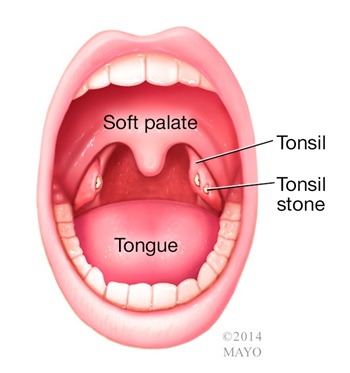
      Tonsil stone illustration

      How are tonsil stones identified?

      Tonsil stones become evident when small pebbles appear on the surface of the tonsils. The stones may look white or yellow. If they form deep in the tissue of the tonsils, the stones may not be visible.

      Tonsil redness and irritation are common symptoms of tonsil stones. In some instances, tonsil stones can cause chronic tonsil inflammation or infection of the tonsils, called tonsillitis.

      People with a history of tonsillitis may be more susceptible to tonsil stones. Each time the tonsils are enlarged from infection, small holes tend to develop from the swelling.

      People with large tonsils also are more at risk of developing tonsil stones. Large tonsils have a large surface area that develops holes on the surface where food particles can collect and turn into tonsil stones.

      Can tonsil stones be prevented?

      It's difficult to prevent tonsil stones because they are created by food and other substances passing through the mouth to the stomach. While you can't prevent them, you can minimize the development of tonsil stones with good oral hygiene.

      Brush your teeth after meals, in the morning and before bed. While brushing your teeth, also gently brush your tongue, followed by flossing. Regularly use a mouthwash that does not have an alcohol base. Good oral hygiene reduces the bacteria in your mouth that can lead to the formation of tonsil stones.

      Tonsil stones are not harmful to your health and are more of a nuisance than an issue. A frequent complaint about tonsil stones is that they tend to cause bad breath due to the bacteria that collect on the tonsils.

      How are tonsil stones treated?

      For people with a history of tonsil stones, removing the tonsils is a permanent way to prevent future bouts. The tonsils are removed in a surgery called tonsillectomy.

      If tonsillectomy surgery is not an option due to your medical history, age or personal preference, you can manage tonsil stones in other ways.

      Talk with your healthcare team about removing tonsil stones on your own. You can remove them by gently pressing on them with a cotton swab. You may also consider using a low-pressure water irrigator to rinse out the crypts in the tonsils. Gargling with salt water after eating can help remove bacteria from the mouth and throat.

      You should see an ENT healthcare professional for tonsil stones if your tonsils look red, bleed easily, or experience sore throat or ear pain. These symptoms can develop after trying to remove or manipulate tonsil stones.

      Watch this video to learn more about tonsil stones and when you should seek medical attention from an ENT professional:

      Pao Vang, M.D., is an otolaryngologist in Eau Claire and Rice Lake, Wisconsin.

      Topics in this Post
      • Ear, Nose and Throat (ENT)

      Related Posts

      Person drinking from mug while sitting and looking at laptop Connection between HPV infection and mouth, throat cancer
      Child drinking orange juice Tonsils: Tiny, but pack a big punch
      lady picking up delivered package Your sinus headache may not be what you think
      Mayo Clinic Health System
      About Us
      Careers
      Volunteer
      Donate
      Contact Us
      Patient Care
      Patients & Visitors
      Classes & Events
      Mayo Clinic Connect
      Mayo Clinic
      Resources
      Referrals
      Community Resources
      Financial Assistance
      Price Transparency
      Compliance
      Notice of Nondiscrimination
      Notice of Privacy Practices
      No Surprises Act
      Terms of Use
      Manage Cookie
      Privacy Policy
      © 2018 - 2026 Mayo Clinic Health System