• Patient Portal
  • Pay Bill
  • Request Appointment
MCHS_Logo_2024_BLACK
    • Cardiology (Heart)
    • Gastroenterology & Hepatology (Digestive Care)
    • Neurosurgery
    • Obstetrics & Gynecology (OB-GYN)
    • Oncology (Cancer)
    • Orthopedics & Orthopedic Surgery (Bones)
    • Primary Care
    • Spine Care
    • Sports Medicine
    • Virtual Care 24/7
    View all specialties
  • Providers
  • Minnesota

    • Albert Lea
    • Austin
    • Blooming Prairie
    • Butterfield
    • Cannon Falls
    • Fairmont
    • Faribault
    • Lake City
    • Mankato
    • New Prague
    • Northfield
    • Owatonna
    • Plainview
    • Red Wing
    • Sherburn
    • St. James
    • Waseca
    • Zumbrota

    Wisconsin

    • Arcadia
    • Barron
    • Bloomer
    • Chetek
    • Chippewa Falls
    • Eau Claire
    • Ellsworth
    • Glenwood City
    • Holmen
    • La Crosse
    • Menomonie
    • Mondovi
    • Onalaska
    • Osseo
    • Prairie du Chien
    • Rice Lake
    • Sparta
    • Tomah
    mchsmap Map view
    • VirtualCare
      Virtual Care
    • SameDayCare
      Same-Day Care
    • PrimaryCare
      Primary Care
    • SpecialtyCare
      Specialty Care
    • View all care options
    • PrimaryCare
      Billing & Insurance
    • SameDayCare
      Financial Assistance
    • VirtualCare
      Price Transparency
    • Hometown Health
    • Classes & Events
    • Self-guided wellness programs
    • Mayo Clinic Connect
    • Community Resources
  • Patient Portal
  • Pay Bill
  • Request Appointment
MCHS_Logo_2024_BLACK
Search Mayo Clinic Health System
    • Cardiology (Heart)
    • Gastroenterology & Hepatology (Digestive Care)
    • Neurosurgery
    • Obstetrics & Gynecology (OB-GYN)
    • Oncology (Cancer)
    • Orthopedics & Orthopedic Surgery (Bones)
    • Primary Care
    • Spine Care
    • Sports Medicine
    • Virtual Care 24/7
    • View all specialties
  • Providers
    • Minnesota

    • Albert Lea
    • Austin
    • Blooming Prairie
    • Butterfield
    • Cannon Falls
    • Fairmont
    • Faribault
    • Lake City
    • Mankato
    • New Prague
    • Northfield
    • Owatonna
    • Plainview
    • Red Wing
    • Sherburn
    • St. James
    • Waseca
    • Zumbrota

      Wisconsin

    • Arcadia
    • Barron
    • Bloomer
    • Chetek
    • Chippewa Falls
    • Eau Claire
    • Ellsworth
    • Glenwood City
    • Holmen
    • La Crosse
    • Menomonie
    • Mondovi
    • Onalaska
    • Osseo
    • Prairie du Chien
    • Rice Lake
    • Sparta
    • Tomah
    • Map view
    • Virtual Care
    • Same-Day Care
    • Primary Care
    • Specialty Care
    • View all care options
    • Billing & Insurance
    • Financial Assistance
    • Price Transparency
    • Hometown Health
    • Classes & Events
    • Self-guided wellness programs
    • Mayo Clinic Connect
    • Community Resources

Recent Posts

  • ColdfluRSV blog photo
    Speaking of Health
    When to seek care for cold, flu and RSV
    March 10, 2026
  • winter outdoor lady and girl 660x370
    Speaking of Health
    Is your sinus pressure a sinus infection?
    February 09, 2026
  • Izzy Iverson
    Patient Stories
    Unexpected vacation ending leads to rare tumor discovery
    February 05, 2026
Featured Topics
  • Behavioral Health
  • Cancer
  • Children's Health (Pediatrics)
  • Exercise and Fitness
  • Heart Health
  • Men's Health
  • Neurosurgery
  • Obstetrics and Gynecology
  • Orthopedic Health
  • Weight-loss (Bariatric) Surgery
  • Women's Health
Speaking of Health
Wednesday, August 11, 2021

Standing all day at work? 7 tips to lower varicose vein risk
Topics in this Post
  • Surgery
Switching heels for flats

By Mayo Clinic Health System staff

Have you noticed large, tender veins in your legs? Do you experience aching or swelling in your legs at the end of the day? Do suffer from restless legs? Have you noticed changes in the color or texture of the skin near your ankles?

If you have answered yes to any of these questions, you may have varicose veins or venous insufficiency.

As the heart pumps blood, your body depends on thin-walled veins to return it. In the leg, gravity works against this flow. Muscle contractions of the leg act as a pump, helping this system. Tiny valves in these veins open as blood flows toward your heart, then close to stop blood from flowing back. If these small valves become damaged or weak, blood can flow backwards and pool in the vein, causing the veins to stretch or twist, leading to varicose veins.

Some risk factors for varicose veins include age, sex, pregnancy, family history and trauma to the leg. Standing or sitting for an extended period can decrease blood circulation in your legs and increase your risk for developing varicose veins.

Many careers, especially those in health care or factory work, require people to stand on their feet most of the day.

If you notice symptoms, try one or more of these 7 tips to improve the health of your legs:

1. Change your position frequently.

Moving is better than standing still. Shift your weight often, and stretch or walk around least every 30 minutes, to keep the blood from settling in your veins.

2. Exercise regularly.

Make exercise a priority when not at work. Regular exercise can strengthen your heart and improve your circulation. Walking and yoga are great ways to encourage blood circulation in your legs.

3. Watch your weight.

Shedding extra pounds takes pressure off your veins. Losing just 10% of your body weight can make a difference.

4. Watch what you wear.

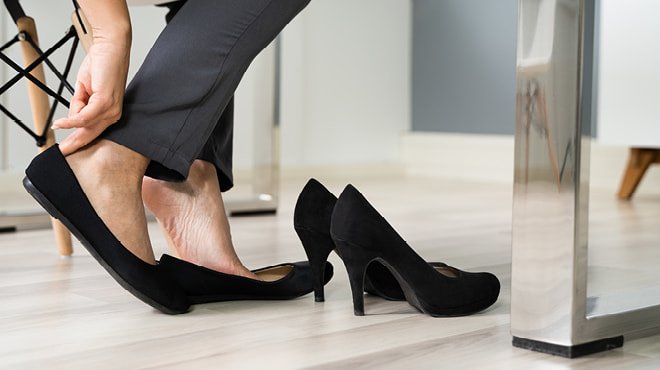
Avoid clothing that is tight around your waist, legs and groin area. Wear low-heeled shoes instead of high heels.

5. Don't smoke.

If you do, quit. Being smoke-free is good for your veins and overall health.

6. Wear compression stockings.

You can purchase compression stockings at most medical supply stores. Be sure to speak with your health care provider or pharmacist before you purchase stockings, as your legs should be measured for proper fit.

7. Elevate your legs.

Before or after work, raise your legs above your heart for 15 minutes.

There are minimally invasive treatment options if your varicose veins do not respond to these tips. In the past, people with varicose veins were treated with vein stripping, a surgical procedure that produced long scars. Today's treatment options produce good results, both cosmetic and symptomatic, with little downtime and scarring.

Radiofrequency or laser ablation uses heat or light to damage the vein and cause it to collapse and fade. Another option is sclerotherapy, which injects a solution through a small incision at in the ankle to cause the vein to collapse. After either procedure, most people can return to work the next day and see full results in two months.

Topics in this Post
  • Surgery

Related Posts

Females with legs crossed seated on a bench Is there a simple treatment for varicose veins?
Provider discussing breast cancer surgical options Surgical options to remove breast cancer
Walking on rocks cuffed jeans Could your leg pain be varicose veins?
Mayo Clinic Health System
About Us
Careers
Volunteer
Donate
Contact Us
Patient Care
Patients & Visitors
Classes & Events
Mayo Clinic Connect
Mayo Clinic
Resources
Referrals
Community Resources
Financial Assistance
Price Transparency
Compliance
Notice of Nondiscrimination
Notice of Privacy Practices
No Surprises Act
Terms of Use
Manage Cookie
Privacy Policy
© 2018 - 2026 Mayo Clinic Health System