• Patient Portal
  • Pay Bill
  • Request Appointment
MCHS_Logo_2024_BLACK
    • Cardiology (Heart)
    • Gastroenterology & Hepatology (Digestive Care)
    • Neurosurgery
    • Obstetrics & Gynecology (OB-GYN)
    • Oncology (Cancer)
    • Orthopedics & Orthopedic Surgery (Bones)
    • Primary Care
    • Spine Care
    • Sports Medicine
    • Urology
    View all specialties
  • Providers
  • Minnesota

    • Albert Lea
    • Austin
    • Blooming Prairie
    • Butterfield
    • Cannon Falls
    • Fairmont
    • Faribault
    • Lake City
    • Mankato
    • New Prague
    • Northfield
    • Owatonna
    • Plainview
    • Red Wing
    • Sherburn
    • St. James
    • Waseca
    • Zumbrota

    Wisconsin

    • Arcadia
    • Barron
    • Bloomer
    • Chetek
    • Chippewa Falls
    • Eau Claire
    • Ellsworth
    • Glenwood City
    • Holmen
    • La Crosse
    • Menomonie
    • Mondovi
    • Onalaska
    • Osseo
    • Prairie du Chien
    • Rice Lake
    • Sparta
    • Tomah
    mchsmap Map view
    • VirtualCare
      Virtual Care
    • SameDayCare
      Same-Day Care
    • PrimaryCare
      Primary Care
    • SpecialtyCare
      Specialty Care
    • View all care options
    • PrimaryCare
      Billing & Insurance
    • SameDayCare
      Financial Assistance
    • VirtualCare
      Price Transparency
  • Health & Wellness Resources
    • Patient Portal
    • Pay Bill
    • Request Appointment
    MCHS_Logo_2024_BLACK
        • Cardiology (Heart)
        • Gastroenterology & Hepatology (Digestive Care)
        • Neurosurgery
        • Obstetrics & Gynecology (OB-GYN)
        • Oncology (Cancer)
        • Orthopedics & Orthopedic Surgery (Bones)
        • Primary Care
        • Spine Care
        • Sports Medicine
        • Urology
        • View all specialties
      • Providers
        • Minnesota

        • Albert Lea
        • Austin
        • Blooming Prairie
        • Butterfield
        • Cannon Falls
        • Fairmont
        • Faribault
        • Lake City
        • Mankato
        • New Prague
        • Northfield
        • Owatonna
        • Plainview
        • Red Wing
        • Sherburn
        • St. James
        • Waseca
        • Zumbrota

          Wisconsin

        • Arcadia
        • Barron
        • Bloomer
        • Chetek
        • Chippewa Falls
        • Eau Claire
        • Ellsworth
        • Glenwood City
        • Holmen
        • La Crosse
        • Menomonie
        • Mondovi
        • Onalaska
        • Osseo
        • Prairie du Chien
        • Rice Lake
        • Sparta
        • Tomah
        • Map view
        • Virtual Care
        • Same-Day Care
        • Primary Care
        • Specialty Care
        • View all care options
        • Billing & Insurance
        • Financial Assistance
        • Price Transparency
      • Health & Wellness Resources

      Recent Posts

      • TreatingNewbornJaundice_Blog_660x370
        Speaking of Health
        Newborn jaundice and light therapy
        December 09, 2025
      • Don H patient blog image
        Patient Stories
        A lifesaver saved: An EMS veteran’s journey from rescue to recovery
        November 14, 2025
      • Child eating apple
        Speaking of Health
        How to help your child reach a healthy weight
        October 29, 2025
      Featured Topics
      • Behavioral Health
      • Cancer
      • Children's Health (Pediatrics)
      • Exercise and Fitness
      • Heart Health
      • Men's Health
      • Neurosurgery
      • Obstetrics and Gynecology
      • Orthopedic Health
      • Weight-loss (Bariatric) Surgery
      • Women's Health
      Speaking of Health
      Tuesday, September 5, 2017

      What is Hashimoto's disease?

      Topics in this Post
      • Thyroid Health
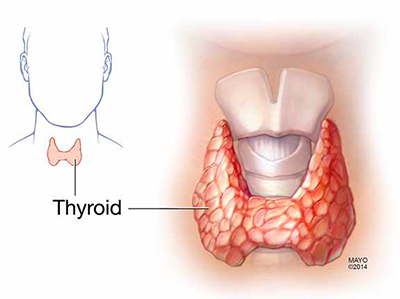
      thyroidmedicalillustration

      Your thyroid gland is a butterfly shaped organ located on the front of your neck. Its main function is to produce a thyroid hormone that helps regulate your metabolism. Hypothyroidism occurs when a person has a decrease in their thyroid function. Hashimoto thyroiditis, also known as Hashimoto’s disease, is the most common cause of hypothyroidism in the U.S.

      Hashimoto’s disease causes chronic inflammation of the thyroid, as antibodies form attacking thyroid cells due to the changes to your immune mechanisms.

      Risk factors

      Stress, infections, certain medications, and environmental and genetic factors are all thought to be triggers of Hashimoto’s disease. Hashimoto’s disease also is thought to be more common in females compared to males and is mostly seen between the ages of 30 and 50, with incidence increasing as you age.

      Symptoms of Hashimoto’s disease

      In some cases, people may not notice the signs or symptoms of Hashimoto’s disease, as thyroid function can be normal. In some rare cases, thyroid function may be increased. However, in most cases, a decrease in thyroid hormone production results in chronic inflammation. This can cause these symptoms:

      • Fatigue
      • Weight gain
      • Constipation
      • Dry skin
      • Hair loss
      • Cold intolerance
      • Depression
      • Menstrual irregularity
      • Joint pain and muscle cramps

      Problems associated with Hashimoto’s disease

      Enlargement of the thyroid gland, also known as a goiter, can occur in patients with Hashimoto’s disease. Most of the time, the goiter does not cause pain. Additionally, it’s not uncommon to see thyroid nodules or abnormal growth of thyroid cells forming lumps. When thyroid nodules or a goiter become big enough, other symptoms may occur, including:

      • Swallowing difficulty
      • Hoarseness
      • Breathing problems

      Why you should seek care

      If you have any of the above symptoms, your doctor may recommend you undergo a thyroid function testing and, sometimes, ultrasound to evaluate your thyroid gland and nodule size. In some cases, a rapidly enlarging thyroid gland can be related to thyroid lymphoma, which is an uncommon, yet highly treatable, form of thyroid cancer. Hashimoto’s disease also can be associated with other autoimmune disorders, such as:

      • Type 1 diabetes
      • Vitiligo
      • Gluten sensitivity
      • Rheumatoid arthritis
      • Addison’s disease or pernicious anemia

      Diagnosis

      Hashimoto’s disease generally is diagnosed using laboratory testing. Decreased thyroid function and increased thyroid antibody levels (thyroid peroxidase and thyroglobulin antibodies) usually are adequate to establish a diagnosis.

      Treatment

      Treatment for Hashimoto’s disease often consists of thyroid hormone replacement using a medication called levothyroxine. Levothyroxine generally is dosed based on your weight. It’s important to make sure you follow directions while using medication of this nature, as it is recommended levothyroxine be taken on an empty stomach 30 to 60 minutes before eating. After starting on medication, thyroid hormone testing needs to be repeated in six to eight weeks for dose adjustment, with the goal of returning your thyroid hormone level to a normal range.

      Make sure to speak to your primary medical care provider if you have any questions. They can provide answers to help keep you and your thyroid healthy.

      Sakine Sever, M.D., is an endocrinologist at Mayo Clinic Health System in Mankato.

      Topics in this Post
      • Thyroid Health

      Related Posts

      Thyroid Thyroid disease diminishes quality of life
      Person's hand holding plaid blanket close to their body Don't blame your thyroid
      Young adult with long dark hair gazing right What is thyroid cancer?
      Mayo Clinic Health System
      About Us
      Careers
      Volunteer
      Donate
      Contact Us
      Patient Care
      Patients & Visitors
      Classes & Events
      Mayo Clinic Connect
      Mayo Clinic
      Resources
      Referrals
      Community Resources
      Financial Assistance
      Price Transparency
      Compliance
      Notice of Nondiscrimination
      Notice of Privacy Practices
      No Surprises Act
      Terms of Use
      Manage Cookie
      Privacy Policy
      © 2018 - 2026 Mayo Clinic Health System