Posted By

Recent Posts
-
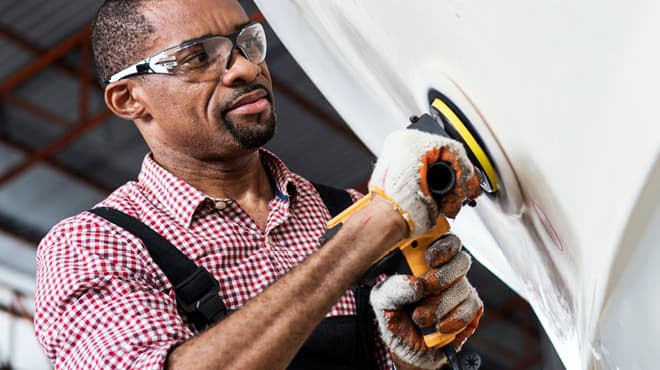
Speaking of HealthWhy do I need safety glasses?
See clearly: Advances in eyewear

New and exciting developments in eyeglasses make them easier to wear and more effective in bringing your world into focus. From lenses to frames to coatings, eyeglasses are becoming more comfortable, durable and stylish. Let's take a look at some of the latest advancements in eyeglasses.
Lenses
The lenses are one of the most important parts of any pair of eyeglasses. Today, new lens materials have made glasses lighter, thinner and more appealing to the wearer.
Here are some lens improvements:
Shatterproof
In the past, lenses were made from glass, which was heavy and more prone to shattering on impact. For safety reasons, most new lens materials are shatterproof. That's a nice feature for all wearers, especially children and people who depend primarily on one eye for sight.
Multifocal
Bifocals garnered a bad reputation in the past, but today's lenses aren't the same bifocals your grandparents wore. Most lined bifocal designs today have a more subtle line than those of the past. Progressive, or no-line, bifocal designs also are popular.
Office
New progressive lens options are called "office lenses," with room, desk and book designs. The right lens design makes seeing — and feeling more comfortable — at different distances easier:
- Room lens — designed for indoor vision and offers clear vision to 14 feet in front of the wearer
- Desk lens — offers clear vision to seven feet
- Book lens — designed for clear vision within three to four feet
Office lenses are great options for people working on a computer or reading for extended periods. They allow people to see near distances efficiently without leaning toward a screen or tipping their heads back to see through a small portion of a traditional progressive lens.
Fatigue-reducing
Another lens option for people who look at a computer screen or small detailed work most of the day is the marketed as the Eyezen lens. It's designed to help with eye fatigue and digital eye strain. It's available in a single-vision digital lens and offers a small amount of accommodative help, similar to a multifocal lens but at a lower power. It is a great option for young professionals and students who do a lot of near work or use computers often.
Executive
Several different types of multifocal lenses are helpful for specific professions as well. An executive lens is a bifocal that goes across all of the lens area and is not confined to a small box or area. For example, police officers have reported having good experiences with executive lenses, as they only have to shift their eyes, not their entire heads, to look at their computer in a squad car.
Reverse bifocal
This is when the part of the lens for seeing close objects is at the top of the frame rather than the bottom. While this might not be helpful for everyone, it can be a great option for people who work on detailed items above their heads, like auto mechanics, electricians or plumbers.
Frames
Eyeglasses frames are not just about style — they also play an important role in how comfortable and functional your glasses are.
In the past, frames were typically made from a nickel metal alloy or plastic called zyl. While these materials are still popular today, there are other options available. Titanium, magnesium and carbon fiber materials are ultralight, flexible and durable.
Frames also can be made from materials like wood, bamboo and recycled denim. These glasses can be stylish, lightweight and comfortable to wear.
The most important part in picking out frames is making sure you have the correct size. If your frames are too wide or narrow, the lenses won't be centered correctly for your sight. The right shape of the frame is also important in relation to your prescription. If you need a strong prescription, your lenses may be thicker at the edges and cosmetically unappealing in the wrong frame design.
Coatings
Eyeglasses coatings protect the lenses and improve their functionality. One of the most common coatings is an anti-reflective or anti-glare coating, which helps to reduce glare and improve vision in bright light conditions. Another common coating is a scratch-resistant coating, which helps protect the lenses from scratches and damage.
Specialty tints on lenses can reduce ocular side effects of migraine headaches, concussions or traumatic brain injuries. A tinted lens, often a shade of blue, purple or red, decreases bothersome symptoms accompanying those conditions by reducing light sensitivity and stimulation.
Lenses that change when exposed to UV light have been available for decades. Recent enhancements, such as extra darkened lenses, work better in a vehicle, and other newer options can transition quicker than lenses in the past. It's important to talk with your optician about your needs so you get the right lens for you.
From custom multifocal lenses to tinted coatings, eyeglasses are becoming more comfortable, durable and functional. Whether you need glasses for reading, driving or everyday use, more options are available now than ever before. Talk with your optometrist about the best lens, frame and coating options for you so you can see clearly and comfortably.
Logan Kiekhafer, O.D., is an optometrist in Eau Claire, Wisconsin.