• Patient Portal
  • Pay Bill
  • Request Appointment
MCHS_Logo_2024_BLACK
    • Cardiology (Heart)
    • Gastroenterology & Hepatology (Digestive Care)
    • Neurosurgery
    • Obstetrics & Gynecology (OB-GYN)
    • Oncology (Cancer)
    • Orthopedics & Orthopedic Surgery (Bones)
    • Primary Care
    • Spine Care
    • Sports Medicine
    • Virtual Care 24/7
    View all specialties
  • Providers
  • Minnesota

    • Albert Lea
    • Austin
    • Blooming Prairie
    • Butterfield
    • Cannon Falls
    • Fairmont
    • Faribault
    • Lake City
    • Mankato
    • New Prague
    • Northfield
    • Owatonna
    • Plainview
    • Red Wing
    • Sherburn
    • St. James
    • Waseca
    • Zumbrota

    Wisconsin

    • Arcadia
    • Barron
    • Bloomer
    • Chetek
    • Chippewa Falls
    • Eau Claire
    • Ellsworth
    • Glenwood City
    • Holmen
    • La Crosse
    • Menomonie
    • Mondovi
    • Onalaska
    • Osseo
    • Prairie du Chien
    • Rice Lake
    • Sparta
    • Tomah
    mchsmap Map view
    • VirtualCare
      Virtual Care
    • SameDayCare
      Same-Day Care
    • PrimaryCare
      Primary Care
    • SpecialtyCare
      Specialty Care
    • View all care options
    • PrimaryCare
      Billing & Insurance
    • SameDayCare
      Financial Assistance
    • VirtualCare
      Price Transparency
    • Hometown Health
    • Classes & Events
    • Self-guided wellness programs
    • Mayo Clinic Connect
    • Community Resources
  • Patient Portal
  • Pay Bill
  • Request Appointment
MCHS_Logo_2024_BLACK
Search Mayo Clinic Health System
    • Cardiology (Heart)
    • Gastroenterology & Hepatology (Digestive Care)
    • Neurosurgery
    • Obstetrics & Gynecology (OB-GYN)
    • Oncology (Cancer)
    • Orthopedics & Orthopedic Surgery (Bones)
    • Primary Care
    • Spine Care
    • Sports Medicine
    • Virtual Care 24/7
    • View all specialties
  • Providers
    • Minnesota

    • Albert Lea
    • Austin
    • Blooming Prairie
    • Butterfield
    • Cannon Falls
    • Fairmont
    • Faribault
    • Lake City
    • Mankato
    • New Prague
    • Northfield
    • Owatonna
    • Plainview
    • Red Wing
    • Sherburn
    • St. James
    • Waseca
    • Zumbrota

      Wisconsin

    • Arcadia
    • Barron
    • Bloomer
    • Chetek
    • Chippewa Falls
    • Eau Claire
    • Ellsworth
    • Glenwood City
    • Holmen
    • La Crosse
    • Menomonie
    • Mondovi
    • Onalaska
    • Osseo
    • Prairie du Chien
    • Rice Lake
    • Sparta
    • Tomah
    • Map view
    • Virtual Care
    • Same-Day Care
    • Primary Care
    • Specialty Care
    • View all care options
    • Billing & Insurance
    • Financial Assistance
    • Price Transparency
    • Hometown Health
    • Classes & Events
    • Self-guided wellness programs
    • Mayo Clinic Connect
    • Community Resources
Posted By
Katie Dease, Au.D.

Katie Dease, Au.D.

Audiology (Hearing)

Recent Posts

  • Hunters in orange vests
    Speaking of Health
    Hunting? Be sure to protect your hearing
    April 08, 2025
  • Closeup of rollerblades on a person's feet
    Speaking of Health
    Don't miss a quiet symptom of concussion
    October 08, 2024
  • Child playing recorder
    Speaking of Health
    Bone-anchored implants: Treating your child's hearing loss

    March 25, 2024
Featured Topics
  • Behavioral Health
  • Cancer
  • Children's Health (Pediatrics)
  • Exercise and Fitness
  • Heart Health
  • Men's Health
  • Neurosurgery
  • Obstetrics and Gynecology
  • Orthopedic Health
  • Weight-loss (Bariatric) Surgery
  • Women's Health
Speaking of Health
Friday, May 3, 2024

Young people wearing earbuds or headphones? Listen up
Topics in this Post
  • Ear Health
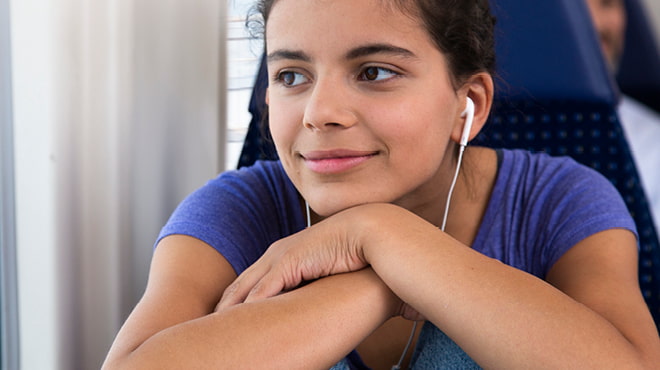
Person wearing earbuds

From tweens to early adults, young people tune in to their playlists, podcasts and phone conversations with in-the-ear devices, such as earbuds. While these devices are a convenient, private way to listen, they're also potentially damaging to hearing.

Global studies released in 2020 revealed that 24% of those ages 12–35 listened to sound at unsafe levels. And it's not just devices that are a hearing risk but also the noisy places young people tend to go, including music venues and other spaces like busy cafes, school cafeterias or sporting events.

How loud is too loud?

The louder the sound, the more damage it can cause to your hearing, and the faster that damage will occur. Sound is measured in decibels (dB). Any sound at or above 85 dB is more likely to damage your hearing over time. How loud is 85 dB? It's equivalent to a food blender or a soundtrack in a movie theater.

Many young people use devices with sound levels much higher than 85 dB. For example, music played through headphones at the highest volume often is 94–110 dB. The upper level of 110 dB is more than 100 times as intense as 85 dB. If a young person is wearing over-ear headphones and you can hear the lyrics, the volume is too high.

In 2022, the World Health Organization issued standards for tackling hearing loss in this age group. One of those standards is for devices to be set at a default output level to protect hearing, typically 70–85 decibels (dB).

However, that default isn't activated in devices bought in the U.S. So it's up to parents, caregivers and users to turn on this default setting. To do this, review the settings on the young person's device.

Why listening at safe levels is crucial at any age

According to the Centers for Disease Control and Prevention, even a small amount of hearing loss in children can profoundly affect their speech, language comprehension, communication, classroom learning and social development.

A national study of children and adolescents ages 6–19 revealed that 12%, or about 5.2 million, have suffered permanent hearing damage from exposure to excessive noise. This type of hearing loss, also known as noise-induced hearing loss, can be caused by one loud blast or by listening at loud levels over time. It usually can't be medically or surgically corrected.

Developing safe listening habits

As the tweens in your life are beginning to be more independent when it comes to making decisions about their listening habits, it's a great time to help them develop safe practices that will protect their hearing for a lifetime.

Three factors apply to safe listening: decibels, time and distance. The higher the decibels, the less time you can listen safely at that level. You can reduce the effect of high sound levels by moving farther away from the source, such as an amp at a concert, which allows you to listen longer.

Here are some tips for safe listening:

  • Activate volume control limits on devices.
  • Teach tweens to lower the volume.
  • Listen with the volume set to 80% for no more than 90 minutes.
  • Move away from loud sound sources.
  • Wear ear protection such as earplugs or earmuffs in noisy environments or during noisy activities.

Also, consider giving your ears a break. Rather than wearing earbuds for eight hours, switch to over-ear headphones. Or wear an earbud in only one ear, then switch to the other. Consider opting for devices with noise-cancellation features and improved sound quality. This may limit the impulse to increase the volume to hear over the noise around you.

Another tip: Keep your in-ear devices clean. An earbud contaminated with bacteria can introduce it into your ear and cause conditions such as swimmer's ear, a painful, itchy infection.

If you suspect the young people in your family may have hearing loss, consult with a healthcare professional or audiologist.

Katie Dease is an audiologist in Owatonna, Minnesota.
Topics in this Post
  • Ear Health

Related Posts

Group with books You can’t remember what you can't hear: The hearing loss, brain health link
Red-headed child lying on bed resting head on hand 6 common questions about earaches and ear infections
Spinning, bleary upward view of trees and sky 5 common misconceptions about vertigo, dizziness
Mayo Clinic Health System
About Us
Careers
Volunteer
Donate
Contact Us
Patient Care
Patients & Visitors
Classes & Events
Mayo Clinic Connect
Mayo Clinic
Resources
Referrals
Community Resources
Financial Assistance
Price Transparency
Compliance
Notice of Nondiscrimination
Notice of Privacy Practices
No Surprises Act
Terms of Use
Manage Cookie
Privacy Policy
© 2018 - 2026 Mayo Clinic Health System