Breast Self-Exam
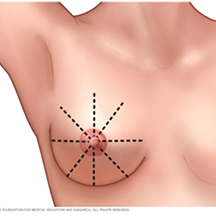
To perform a breast self-exam for breast awareness, use a methodical approach that ensures you cover your entire breast. For instance, imagine that your breasts are divided into equal wedges, like pieces of a pie, and sweep your fingers along each piece in toward your nipple. Learn more.
Conditions treated
Our team offers care for a variety of breast issues.
Common breast care concerns include:
- Breast cancer prevention
While some risk factors, such as family history, can’t be changed, research shows that healthy lifestyle choices can help lower the risk of breast cancer — even for people at higher risk. These include limiting alcohol intake, maintaining a healthy weight, staying physically active, and breastfeeding when possible. Limiting postmenopausal hormone therapy may also reduce risk. For people with a strong family history or inherited risk, genetic counseling can help assess risk and guide personalized screening recommendations. Early detection remains important, so talk with your healthcare provider about when to begin mammograms and other screenings based on your personal history. - Breast lumps
A breast lump can feel like a mass, thickened area or fullness and may vary in how it looks or feels. While some breast lumps can be a sign of breast cancer, most are caused by noncancerous conditions such as cysts or fibrocystic breast changes. Seek medical evaluation if a lump is new, changes over time or is accompanied by symptoms such as skin changes, nipple inversion or nipple discharge. - Breastfeeding issues
Breastfeeding can present many concerns for moms, including pain, engorgement, pumping, going back to work, difficulty with latch and difficulty letting milk supply down — all of which can be supported through breast care and lactation services.
Diagnosis & treatments
Our experienced healthcare team will help connect you with the breast care you need:
Breast self-exams
Breast self-exams are one way to detect breast lumps early. Conducting regular at-home breast self-exams is a good way to get to know your breasts so that you can identify if your breasts change. If you notice new breast changes, discuss these with your primary healthcare provider as soon as possible.
To perform a breast self-exam for breast awareness, use a methodical approach that ensures you cover your entire breast. For instance, imagine that your breasts are divided into equal wedges, like pieces of a pie, and sweep your fingers along each piece in toward your nipple.
Breast cancer symptoms
General warning signs of breast cancer include:
- General breast pain.
- A new lump in the breast.
- Breast thickening or swelling.
- Shift in the breast shape or size.
- Changes in the nipple, or a nipple that begins to turn inward.
- Discharge from your nipple.
- Changes to the skin covering your breast, such as dimpling, puckering, redness or scaling.
Breast self awareness can help you notice changes, but it does not replace mammograms or clinical breast exams recommended by your healthcare provider.
In-office breast exams
- In-office manual breast exams are conducted as part of annual wellness exams.
Mammography
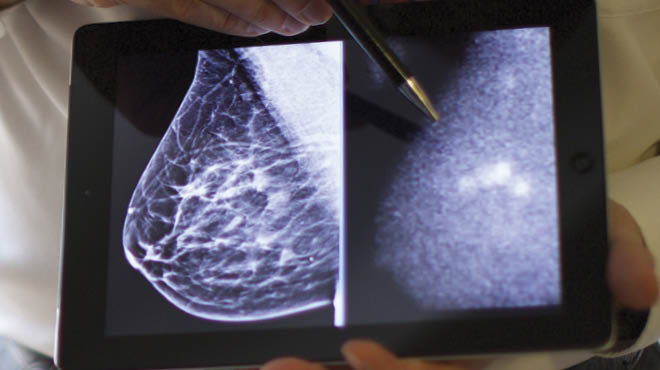
- Mammography exams, also known as mammograms, provide accurate answers using advanced diagnostic imaging.
Lactation specialists
- Lactation specialists are available to help moms with breastfeeding questions and concerns.
Lump assessments
- Lump assessments are conducted manually in-office and referred on for further screening, if warranted.
Mastitis
- Mastitis, or plugged ducts, can be uncomfortable for breastfeeding mothers. These conditions most often occur in the first several weeks after delivery but can happen at any time during breastfeeding. Plugged ducts tend to develop gradually and may cause a painful lump or localized breast tenderness, while mastitis can appear more suddenly and may include fever, chills or flu‑like symptoms. Early treatment — such as rest, fluids, frequent breastfeeding or pumping, and proper breast emptying — can help relieve symptoms. It’s safe and recommended to continue breastfeeding, even if antibiotics are needed.
Locations View all Breast Care locations

La Crosse, WI
Family Health Clinic- Call for appointment
- Mon-Fri:7:00 AM - 7:00 PM
- 608-392-7390

Arcadia, WI
Clinic- Call for appointment
- Mon-Fri:7:00 AM - 7:00 PM
- 608-392-9822

Cannon Falls, MN
Hospital and Clinic- Call for appointment
- Mon-Fri:7:00 AM - 7:00 PM
- 651-267-5500
- General
- 507-263-6000

Eau Claire, WI
Luther Campus Clinic- Call for appointment
- Mon-Fri:7:00 AM - 7:00 PM
- 715-838-3926
Care Team
OB-GYN and Primary Care experts are most likely to provide initial care for your breast health. Together you will discuss family history and breast screening guidelines, and they will refer you to other specialties as needed.
Additional care may be provided by:
FAQ
-
When should I see a doctor for a breast concern?
You should seek medical evaluation if you notice a new or changing breast lump, changes in breast skin or nipple appearance, nipple discharge, or ongoing breast pain. Early evaluation helps determine whether symptoms are caused by a benign condition or require further testing.
-
What breast symptoms should not be ignored?
New or changing breast lumps, changes in breast skin or nipple appearance, nipple discharge, or persistent breast pain should be evaluated by a healthcare professional. Early evaluation helps determine whether symptoms are benign or require additional testing.
-
Can men have breast health concerns?
Yes. Breast health is important for people of all genders. Men can experience breast lumps, pain and, in rare cases, breast cancer, and should seek medical evaluation for any breast changes.
-
Are most breast lumps cancerous?
No. Most breast lumps are caused by noncancerous conditions such as cysts or fibrocystic breast changes. However, any new or changing lump should be checked by a healthcare professional.
-
Can breast conditions affect people who are not breastfeeding or pregnant?
Yes. Breast conditions such as lumps, pain and breast cancer can affect people of all genders and at different stages of life. Breast care services are available whether or not someone is pregnant, breastfeeding or postmenopausal.
-
Is it safe to breastfeed if I have mastitis or a plugged duct?
Yes. Continuing to breastfeed or pump is safe and recommended, even if antibiotics are needed. Breastfeeding helps clear the blockage, or infection and supports recovery.
-
What types of providers care for breast health concerns?
Breast care often begins with primary care or OB‑GYN providers, who may refer patients to specialists such as breast clinics, mammography, oncology or surgery based on individual needs.
-
What should I bring for my first appointment?
For your first appointment, bring your current prescription information or medical records from non-Mayo Clinic Health System facilities. Complete a medical records release form to authorize the transfer of health records from another healthcare facility to us. Visit our Medical Record Forms page for this form and other forms in multiple languages.
-
What are my payment options, and do you offer financial assistance?
Our Patient Account Services representatives can assist you with any issues related to billing and insurance. We also offer financial assistance if you are unable to pay for care due to financial hardship.
-
Can you provide a second opinion?
Yes. Call the appointment number at your preferred breast care location.
-
Do you have an after-hours number in case of emergency?
Always call 911 in case of an emergency. For after-hours help with other issues, get virtual care 24/7 through the Primary Care On Demand app or review our convenient care options.
Related Upcoming Classes & Events View all classes & events
This class is for moms at 24–32 weeks' gestation to learn breastfeeding basics and how to establish a successful breastfeeding relationship with baby.