• Patient Portal
  • Pay Bill
  • Request Appointment
MCHS_Logo_2024_BLACK
    • Cardiology (Heart)
    • Gastroenterology & Hepatology (Digestive Care)
    • Neurosurgery
    • Obstetrics & Gynecology (OB-GYN)
    • Oncology (Cancer)
    • Orthopedics & Orthopedic Surgery (Bones)
    • Primary Care
    • Spine Care
    • Sports Medicine
    • Virtual Care 24/7
    View all specialties
  • Providers
  • Minnesota

    • Albert Lea
    • Austin
    • Blooming Prairie
    • Butterfield
    • Cannon Falls
    • Fairmont
    • Faribault
    • Lake City
    • Mankato
    • New Prague
    • Northfield
    • Owatonna
    • Plainview
    • Red Wing
    • Sherburn
    • St. James
    • Waseca
    • Zumbrota

    Wisconsin

    • Arcadia
    • Barron
    • Bloomer
    • Chetek
    • Chippewa Falls
    • Eau Claire
    • Ellsworth
    • Glenwood City
    • Holmen
    • La Crosse
    • Menomonie
    • Mondovi
    • Onalaska
    • Osseo
    • Prairie du Chien
    • Rice Lake
    • Sparta
    • Tomah
    mchsmap Map view
    • VirtualCare
      Virtual Care
    • SameDayCare
      Same-Day Care
    • PrimaryCare
      Primary Care
    • SpecialtyCare
      Specialty Care
    • View all care options
    • PrimaryCare
      Billing & Insurance
    • SameDayCare
      Financial Assistance
    • VirtualCare
      Price Transparency
    • Hometown Health
    • Classes & Events
    • Self-guided wellness programs
    • Mayo Clinic Connect
    • Community Resources
  • Patient Portal
  • Pay Bill
  • Request Appointment
MCHS_Logo_2024_BLACK
Search Mayo Clinic Health System
    • Cardiology (Heart)
    • Gastroenterology & Hepatology (Digestive Care)
    • Neurosurgery
    • Obstetrics & Gynecology (OB-GYN)
    • Oncology (Cancer)
    • Orthopedics & Orthopedic Surgery (Bones)
    • Primary Care
    • Spine Care
    • Sports Medicine
    • Virtual Care 24/7
    • View all specialties
  • Providers
    • Minnesota

    • Albert Lea
    • Austin
    • Blooming Prairie
    • Butterfield
    • Cannon Falls
    • Fairmont
    • Faribault
    • Lake City
    • Mankato
    • New Prague
    • Northfield
    • Owatonna
    • Plainview
    • Red Wing
    • Sherburn
    • St. James
    • Waseca
    • Zumbrota

      Wisconsin

    • Arcadia
    • Barron
    • Bloomer
    • Chetek
    • Chippewa Falls
    • Eau Claire
    • Ellsworth
    • Glenwood City
    • Holmen
    • La Crosse
    • Menomonie
    • Mondovi
    • Onalaska
    • Osseo
    • Prairie du Chien
    • Rice Lake
    • Sparta
    • Tomah
    • Map view
    • Virtual Care
    • Same-Day Care
    • Primary Care
    • Specialty Care
    • View all care options
    • Billing & Insurance
    • Financial Assistance
    • Price Transparency
    • Hometown Health
    • Classes & Events
    • Self-guided wellness programs
    • Mayo Clinic Connect
    • Community Resources
  • Home
  • About Us
  • Careers
  • Patients & Visitors
  • Services & Treatments
Need to make an appointment?
  • 507-594-2929

Oncology (Cancer)

  • Overview
  • Prevention/Screening
  • Cancer Diagnosis
    • Cancer Defined
    • How Cancer is Diagnosed
    • Cancer Survival Rate
  • Common Cancers
  • Breast Cancer Care
  • Cancer Treatments
  • Radiation Oncology
  • Andreas Cancer Center
  • Coping With Cancer
  • Program Accreditation
  • Cancer Resources

How Cancer is Diagnosed

Your doctor may use one or more approaches to diagnose cancer:

Physical exam. Your doctor may feel areas of your body for lumps that may indicate a tumor. During a physical exam, he or she may look for abnormalities, such as changes in skin color or enlargement of an organ, that may indicate the presence of cancer.

Laboratory tests. Laboratory tests, such as urine and blood tests, may help your doctor identify abnormalities that can be caused by cancer. For instance, in people with leukemia, a common blood test called complete blood count may reveal an unusual number or type of white blood cells.

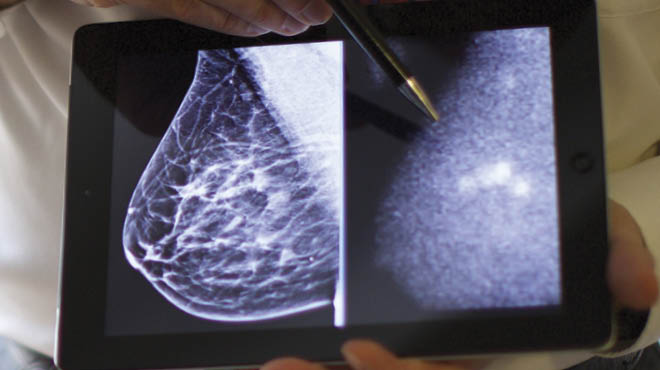
Imaging tests. Imaging tests allow your doctor to examine your bones and internal organs in a noninvasive way. Imaging tests used in diagnosing cancer may include a computerized tomography (CT) scan, bone scan, magnetic resonance imaging (MRI), positron emission tomography (PET) scan, ultrasound and X-ray, among others.

Biopsy. During a biopsy, your doctor collects a sample of cells for testing in the laboratory. There are several ways of collecting a sample. Which biopsy procedure is right for you depends on your type of cancer and its location. In most cases, a biopsy is the only way to definitively diagnose cancer.

In the laboratory, doctors look at cell samples under the microscope. Normal cells look uniform, with similar sizes and orderly organization. Cancer cells look less orderly, with varying sizes and without apparent organization.


Not all treatments, tests and services are available at all Mayo Clinic Health System locations. Check with your preferred location in advance.
Mayo Clinic Health System
About Us
Careers
Volunteer
Donate
Contact Us
Patient Care
Patients & Visitors
Classes & Events
Mayo Clinic Connect
Mayo Clinic
Resources
Referrals
Community Resources
Financial Assistance
Price Transparency
Compliance
Notice of Nondiscrimination
Notice of Privacy Practices
No Surprises Act
Terms of Use
Manage Cookie
Privacy Policy
© 2018 - 2026 Mayo Clinic Health System